
Overview
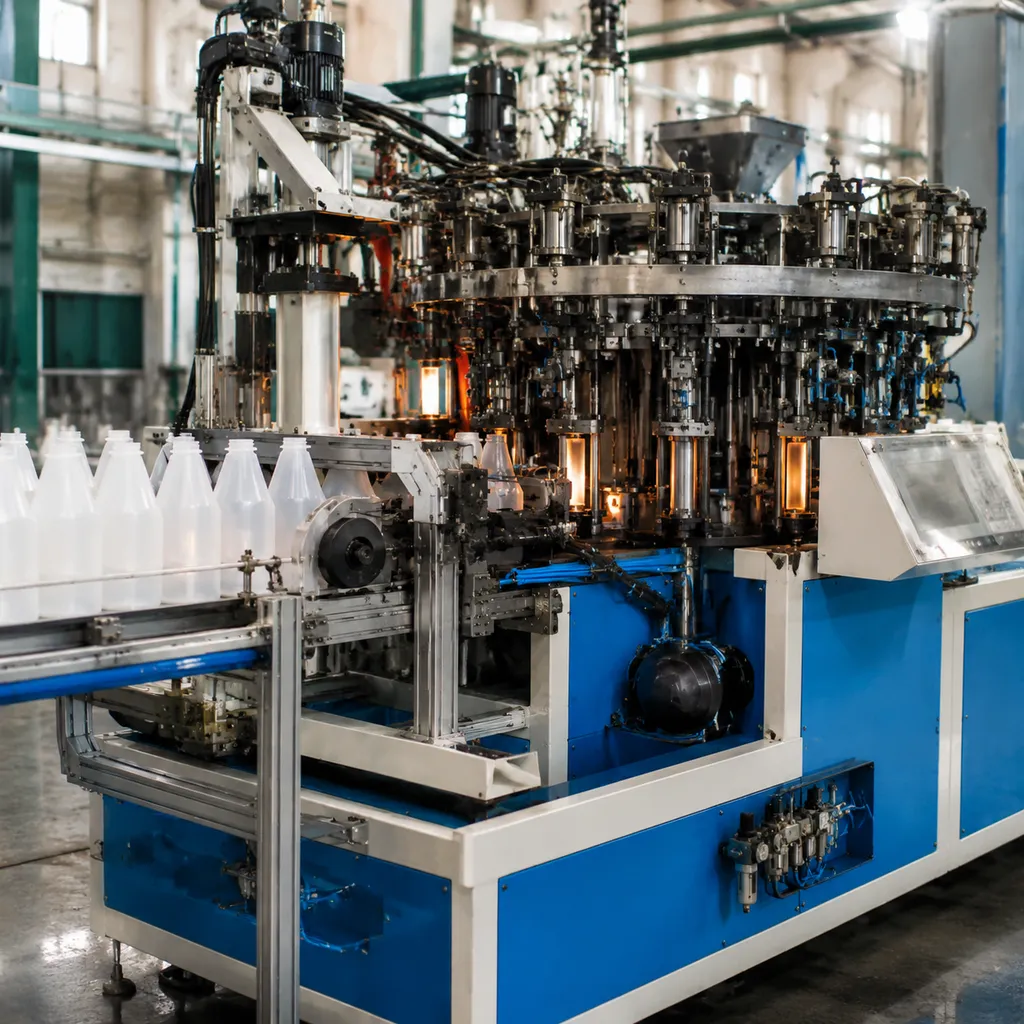
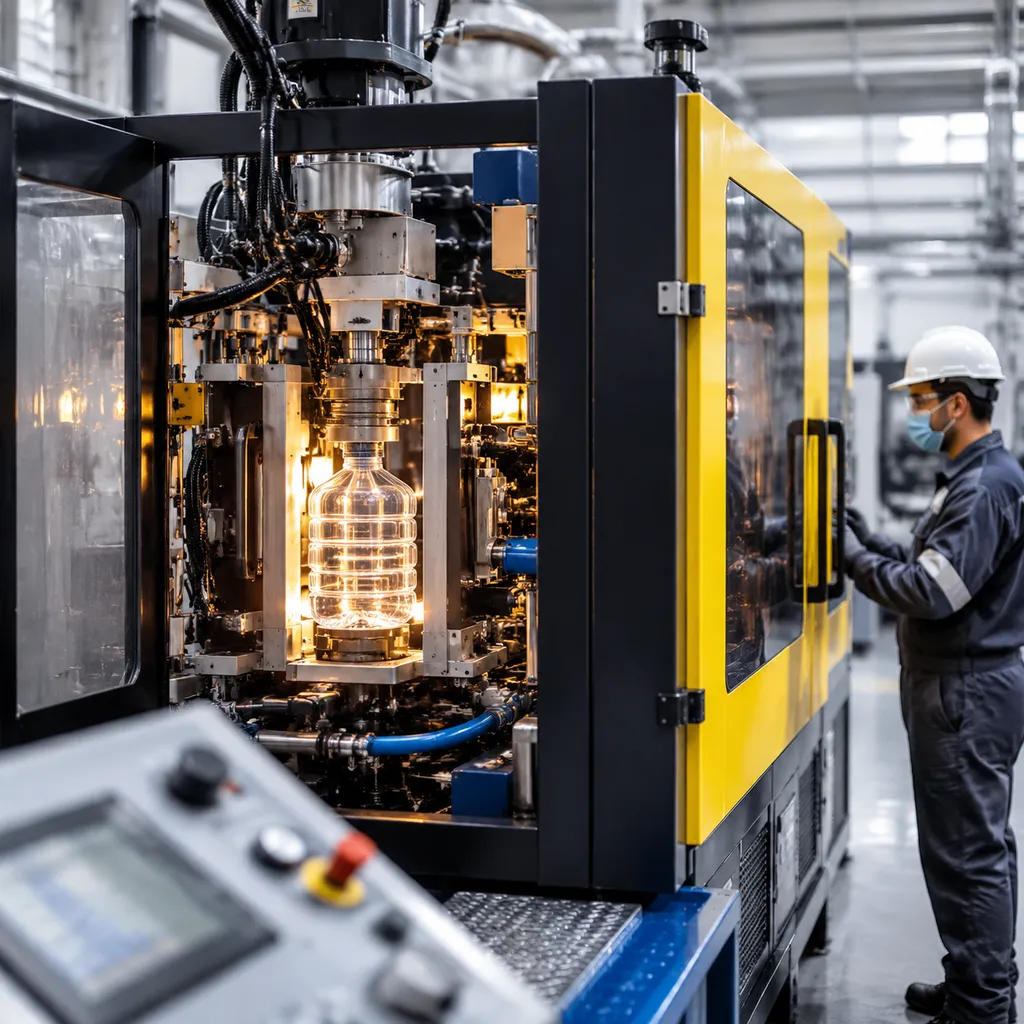
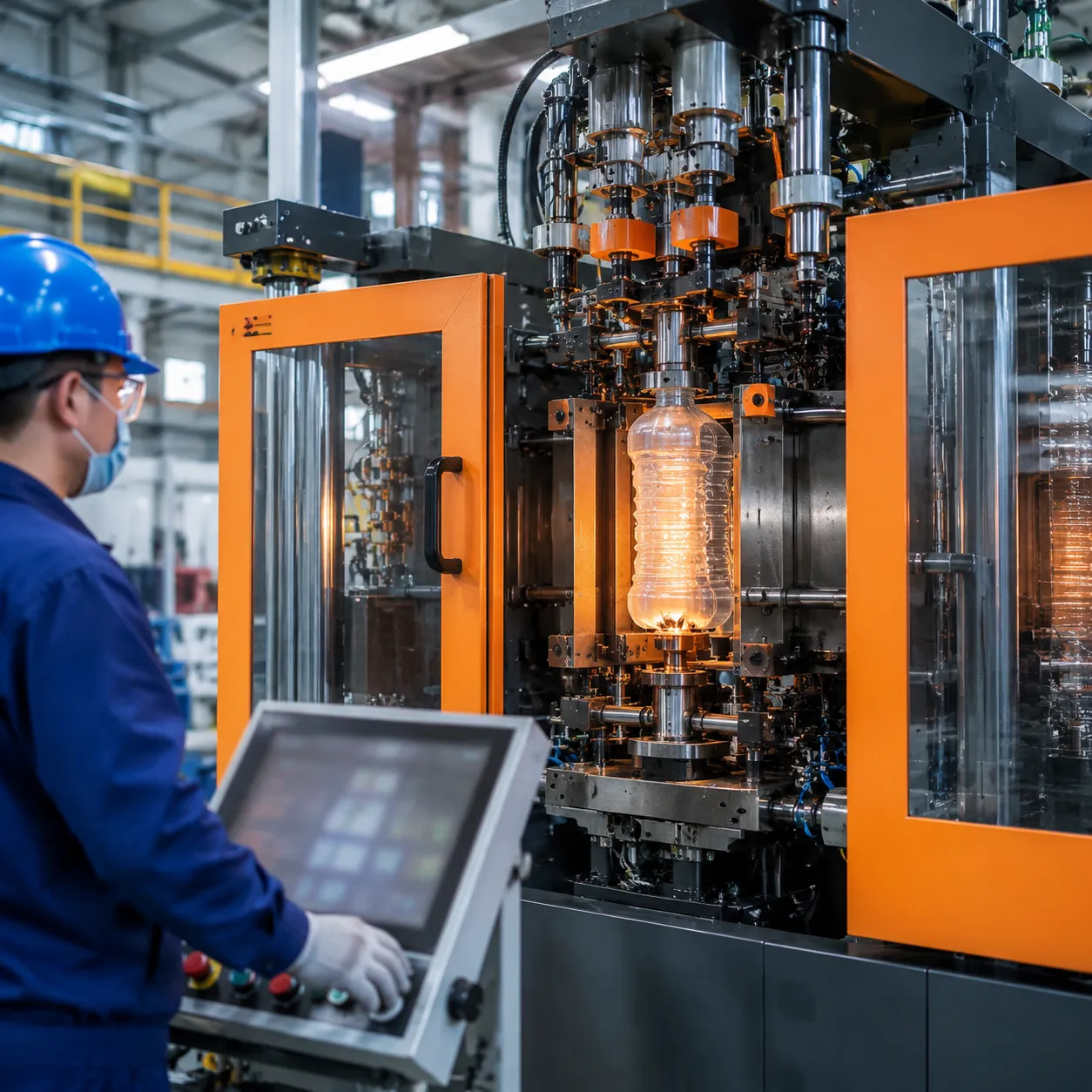
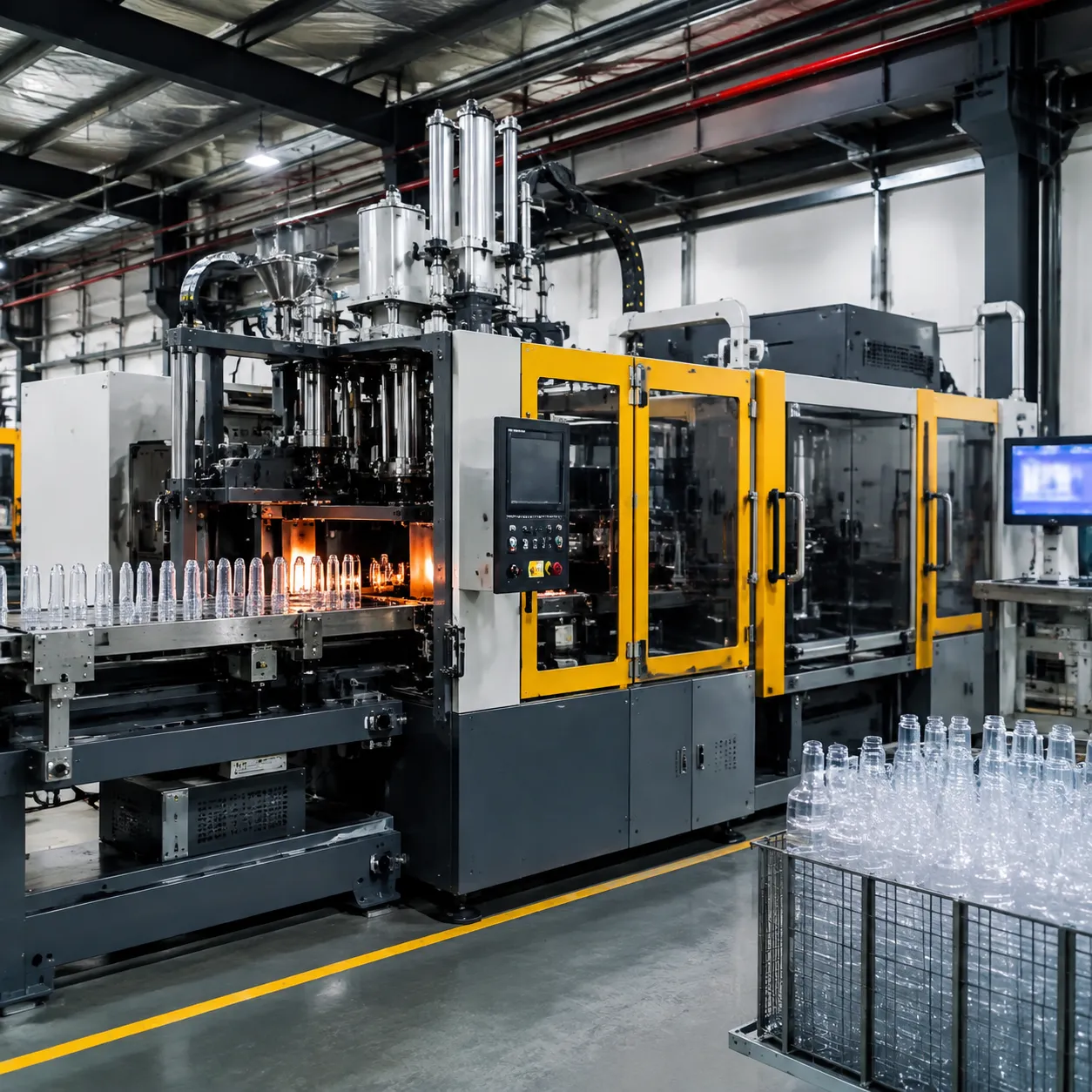
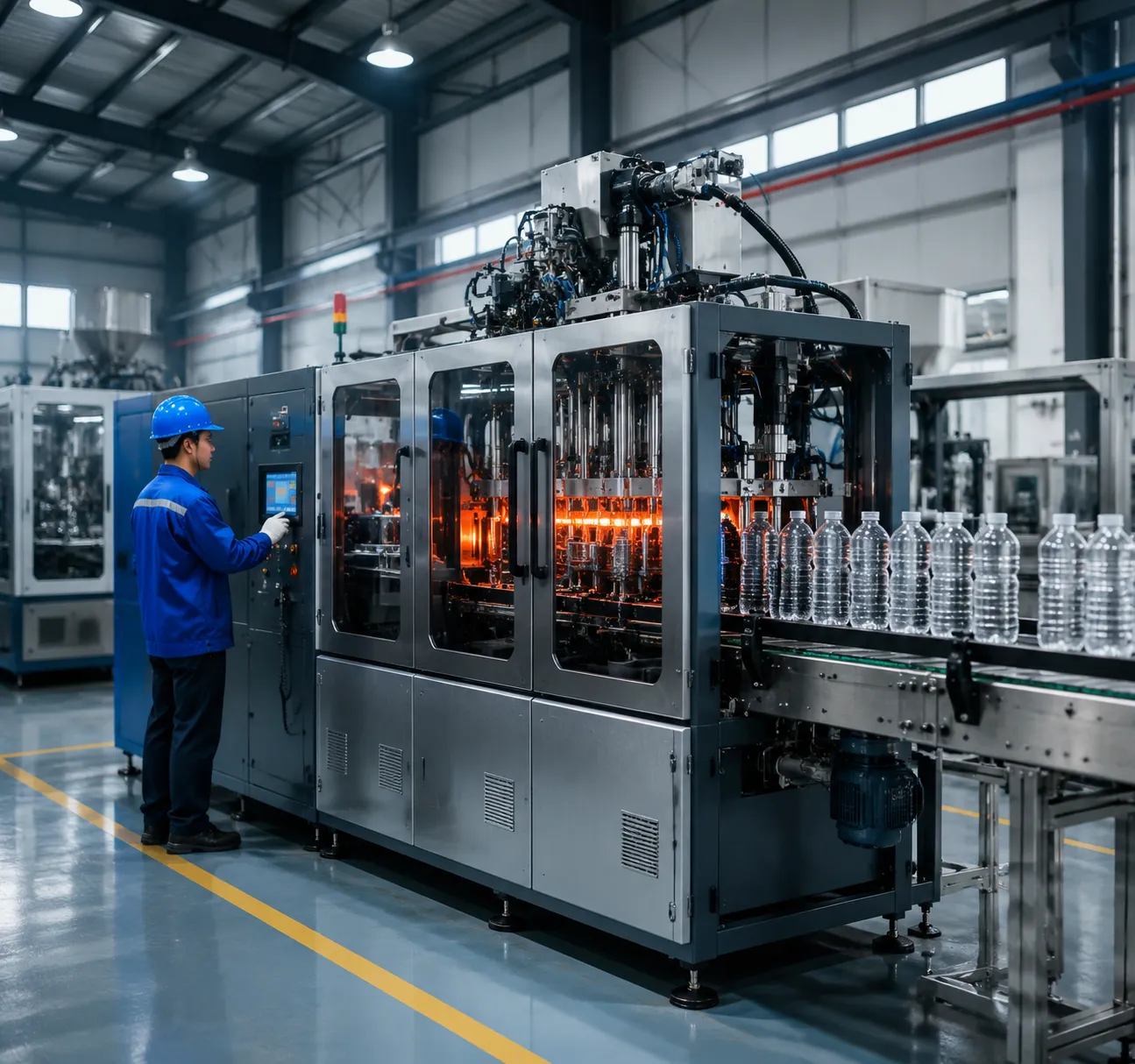
Automatic Blow Molding Machine for PET Bottles — BlowPacker SBM Series
| Model tier | Cavities | Production capacity (BPH) | Max volume | Layout | Typical neck |
|---|---|---|---|---|---|
| SBM-2L / SBM-4L | 2–4 | 3,000 – 7,200 | 1.5 – 2.0 L | Linear stretch blow moulding | 18 – 38 mm |
| SBM-8R / SBM-12R | 8–12 | 14,000 – 24,000 | 0.6 – 0.75 L | Rotary blow moulding | 18 – 32 mm |
For pilot runs below roughly 1,200 bottles per hour, a cheap price semi-automatic blow molding machine keeps capex low; for budget stretch lines with 4–6 cavities, compare the factory price automatic stretch blow molding machine before specifying this automatic blow molding machine for pet bottles SBM platform.
Beverage fillers, edible-oil packers, and personal-care bottling halls use the BlowPacker SBM Series as a fully automatic two-step stretch blow molding process cell — preform heating, servo stretch, and high-pressure blowing in one enclosed line sized for US 460 V / 60 Hz utilities.
Introduction to the BlowPacker SBM Series
The SBM Series is a next-generation automatic pet blow molding machine line: preforms load automatically, infrared zones heat each cavity profile, and servo stretch rods form crystal-clear pet containers without manual handling between cycles.
Target Applications
This pet container manufacturing equipment covers standard and specialty formats across:
- Beverages: Mineral water, carbonated soft drinks, juices, and ready-to-drink teas.
- Personal Care & Cosmetics: Shampoos, lotions, and liquid soaps in precise pet containers.
- Household Products: Detergents, cleaners, and chemical packaging.
- Food Packaging: Cooking oils, wide-mouth jars, and condiments.
- Pharmaceutical Packaging: Hygienic medicine and supplement bottles with repeatable neck finish.
Scalable Container Volume Matrix
Multi-cavity and dual-cavity layouts scale across bottle families without replacing the entire line:
| Container size | Configuration support | Ideal applications |
|---|---|---|
| 100 ml – 2 L | 2-cavity to 8-cavity | Water, energy drinks, personal care |
| 2 L – 5 L | Dual-cavity / 4-cavity | Juice, household cleaners |
| 5 L – 20 L | Single / double cavity | Water-cooler jugs, bulk edible oil |
Key Performance Indicators (KPIs)
Each automatic PET stretch blow molding machine tier targets measurable line KPIs:
- Production capacity: 2,000 – 24,000 bph across linear and rotary cavities.
- Scrap rate: Servo-driven stretch blow molding holds rejects below 0.1–0.2%.
- Energy efficiency: High-pressure air recovery cuts electricity and compressed-air load by up to 30%.
- Mold flexibility: Quick-change bases support dual-cavity and multi-cavity tooling with 15–30 minute changeovers.
Two-stage reheat stretch blow molding on this platform follows the same axial-stretch and staged blowing sequence used on high-volume rotary PET lines globally — the core process referenced in industry documentation alongside systems such as Sidel two-step stretch technology.
Automatic Blow Molding Machine for PET Bottles — Energy & Operating Savings
All-servo architecture and staged air recovery on this automatic blow molding machine for pet bottles target lower total cost of ownership without sacrificing cycle stability.
Engineering Features Breakdown
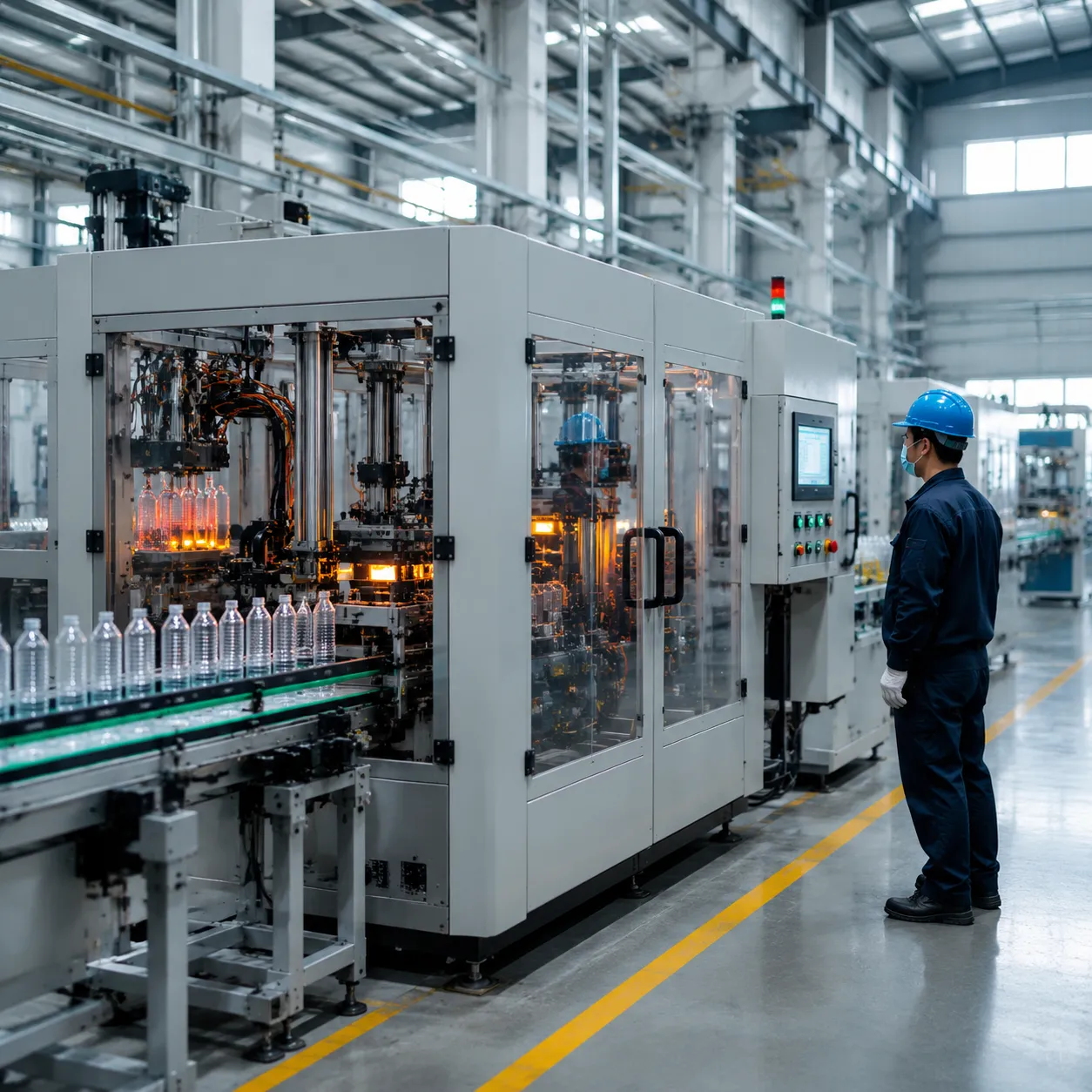
- All-Servo Energy-Saving Architecture: Synchronized servo axes replace legacy pneumatic transfer cylinders, holding wall thickness during stretch blow molding while cutting power draw by up to 30%.
- Precision Preform Heating System: Optimized infrared oven with neck cooling protects threads while the body reaches setpoint for two-step stretch blow molding process cycles.
- High-Pressure Air Recovery System: Captured exhaust air feeds low-pressure circuits and pre-blow stages, reducing compressor load by up to 25–40%.
- Rapid Mold Changeover System: Quick-lock mold bases allow tooling swaps in under 15 minutes on rotary tiers and under 30 minutes on large-cavity linear cells.
Performance Impact Matrix
| Feature | Technical target | Direct operational benefit |
|---|---|---|
| Servo drive system | Zero pneumatic jitter | Less wear, uniform bottle wall thickness |
| IR heating optimization | Short-pitch preform feeding | Lower power draw, smaller footprint |
| Air recycling circuit | Up to 40% air recovery rate | Smaller required compressor capacity |
| Quick-change tooling | <15 min changeovers (rotary) | Higher uptime on multi-SKU runs |
Technical Specifications: Automatic Blow Molding Machine for PET Bottles
Match daily output targets to linear or rotary SBM tiers using the parameter matrix below.
BlowPacker SBM Series Parameter Matrix
| Model series | Number of cavities | Theoretical output (BPH) | Max container volume | Neck diameter range | Operating air pressure | Total installed power |
|---|---|---|---|---|---|---|
| SBM-2L | 2 Cavities | 3,000 – 3,600 BPH | 2.0 Liters | 18mm – 38mm | 3.0 – 4.0 MPa | 38 kW |
| SBM-4L | 4 Cavities | 6,000 – 7,200 BPH | 1.5 Liters | 18mm – 38mm | 3.0 – 4.0 MPa | 72 kW |
| SBM-6L | 6 Cavities | 9,000 – 11,000 BPH | 1.0 Liter | 18mm – 32mm | 3.5 – 4.0 MPa | 105 kW |
| SBM-8R (Rotary) | 8 Cavities | 14,000 – 16,000 BPH | 0.75 Liters | 18mm – 32mm | 3.5 – 4.0 MPa | 140 kW |
| SBM-12R (Rotary) | 12 Cavities | 22,000 – 24,000 BPH | 0.6 Liters | 18mm – 28mm | 3.8 – 4.2 MPa | 195 kW |
Typical footprint (L × W × H): SBM-2L ≈ 3.2 × 1.6 × 1.9 m · SBM-4L ≈ 4.2 × 1.8 × 2.1 m · SBM-6L ≈ 4.8 × 2.0 × 2.2 m · SBM-8R ≈ 5.5 × 2.2 × 2.2 m (final layout confirmed at engineering sign-off).
Key Utility Data
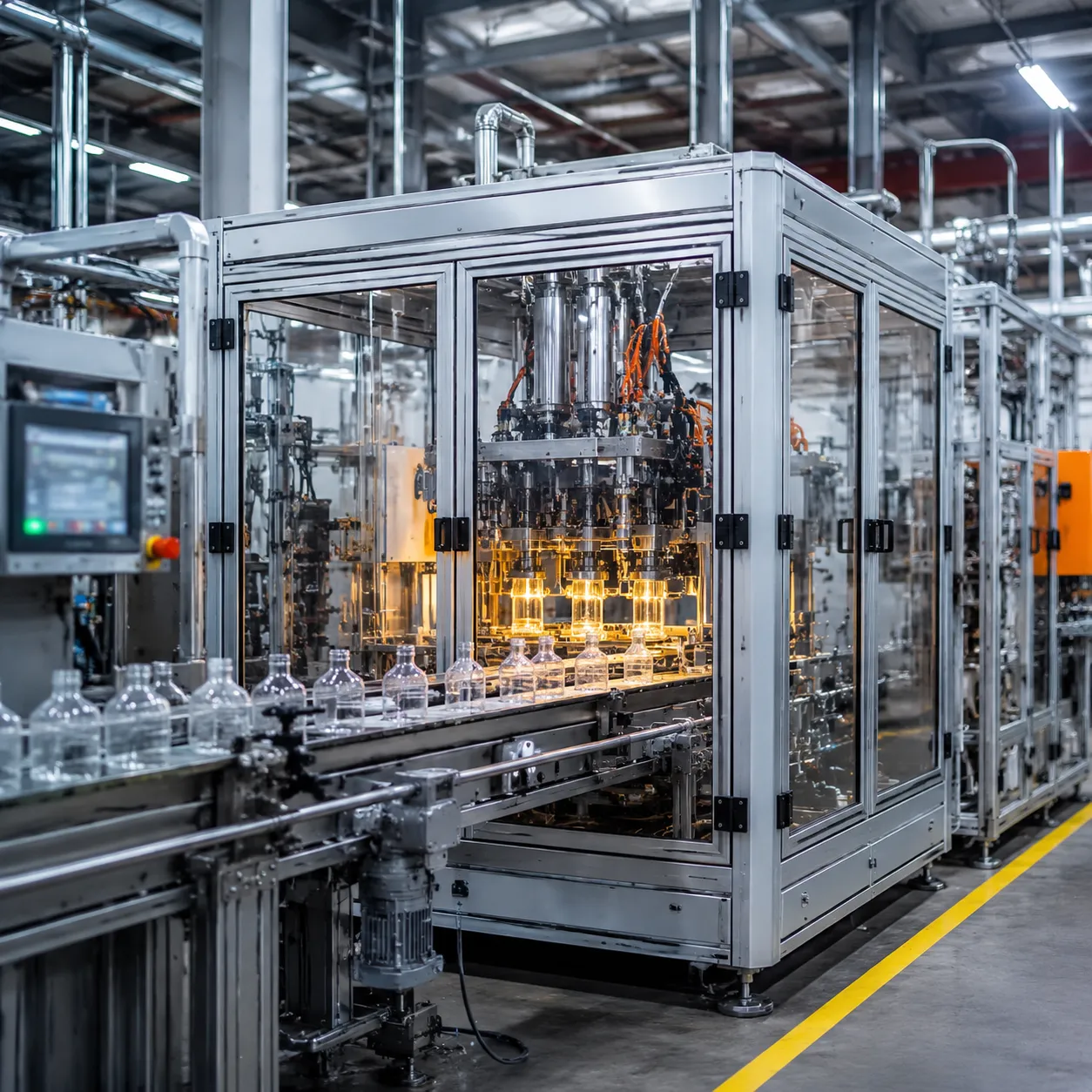
- Two-step stretch blow molding process: Separate preform heating and blowing stages for optimal material distribution.
- High-pressure air recovery system: Recovers up to 30% of exhaust air for low-pressure operations and pre-blowing.
- Servo-driven stretch blow molding: High-precision synchronization for reliable wall thickness in every PET container.
Premium Component Integration & Build Quality
Tier-1 controls, pneumatics, and safety hardware keep the automatic blow molding machine for pet bottles line running on repeatable shift cycles.
Control & Automation
- Main processor: B&R or Beckhoff industrial PCs with real-time synchronization and multi-recipe memory.
- User interface: Multilingual touchscreen HMI for heating profiles and blowing pressure.
- Smart connectivity: IoT gateway ready for remote data tracking and predictive maintenance in a smart factory layout.
Pneumatics & Valves
- High-pressure blowing valves: Seitz or Eugen Seitz valve blocks for fast response during bottle formation.
- Pneumatic actuators: Festo or SMC cylinders on preform feed and ejection paths.
Hydraulics & Clamping
- Servo clamping system: Heavy-duty toggle with high-torque servo motor for fast mold closing.
- Pressure compensation: Wear-resistant plates distribute force evenly to limit flash on finished pet containers.
Safety & Compliance
- Full enclosure: Physical shielding around high-speed moving parts and high-pressure air lines.
- Standard compliance: CE and OSHA-aligned guarding on every fully automatic bottle blowing machine shipment.
- Safety light curtains: Sick sensors pause cycles if the perimeter is breached.
Custom Mold Design & Tooling Capabilities
Custom CNC bottle molds pair with the automatic blow molding machine for pet bottles to hit target clarity, top-load, and cycle time on each SKU.
In-House CNC Engineering
Precision CNC milling holds cavity geometry to micron-level repeatability for integration with fully automatic bottle blowing machine clamp interfaces.
Conformal Cooling Channels
Conformal cooling mapped to bottle geometry delivers up to 25% faster cycle times, uniform heat dissipation, and consistent material distribution across the PET container manufacturing cycle.
Specialty Bottle Capabilities
Two-step stretch blow molding process tooling covers complex geometries including:
- Hot-fill containers: High-temperature pasteurization without collapse.
- Custom handles & grips: Juice, liquor, and household chemical shapes.
- Lightweight water bottles: Reduced resin with maintained top-load.
- Wide-mouth jars: Food-grade pet containers; thick-wall pp containers route to an automatic PP blow molding machine when preform stretch is not the brief.
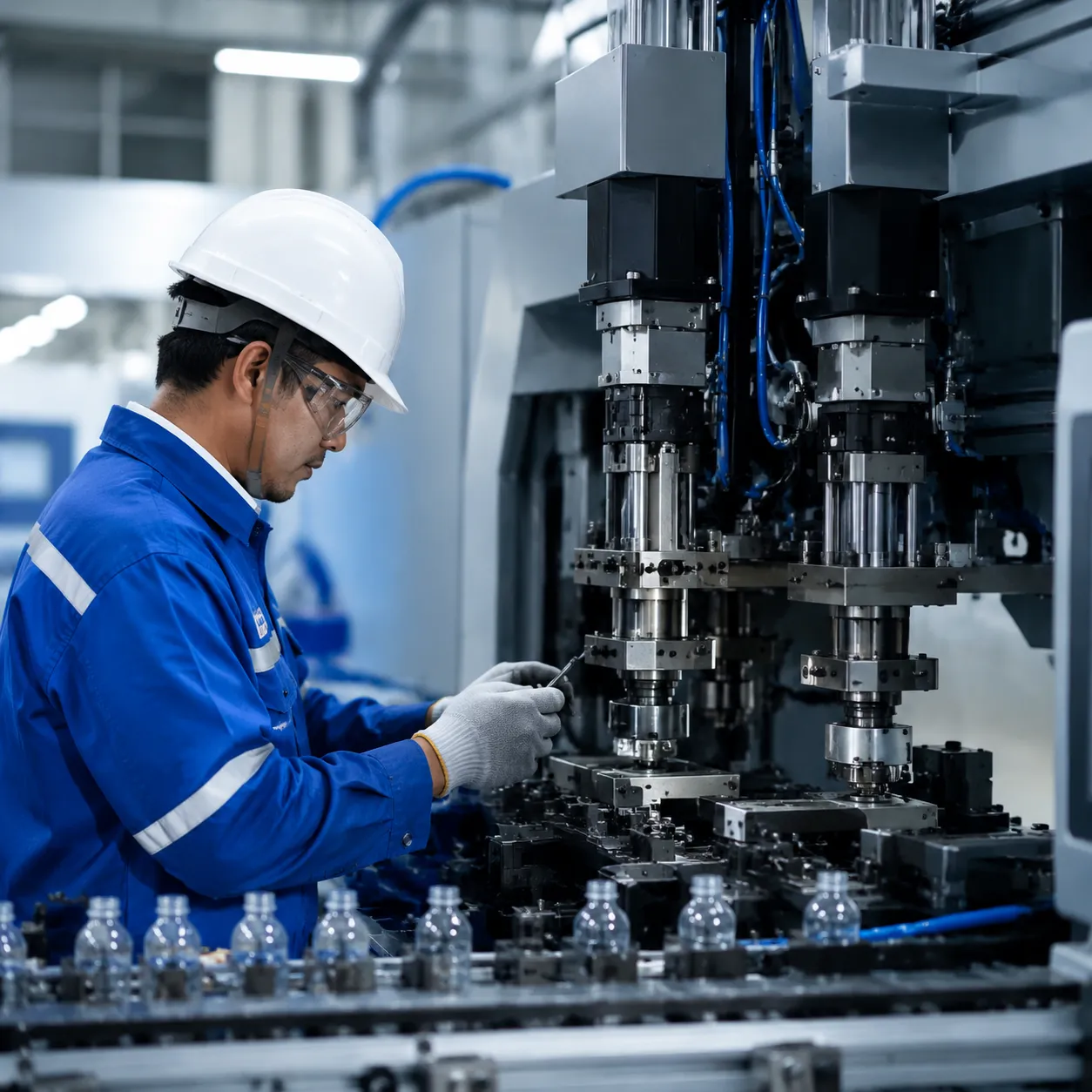
Turnkey Packaging Line Integration
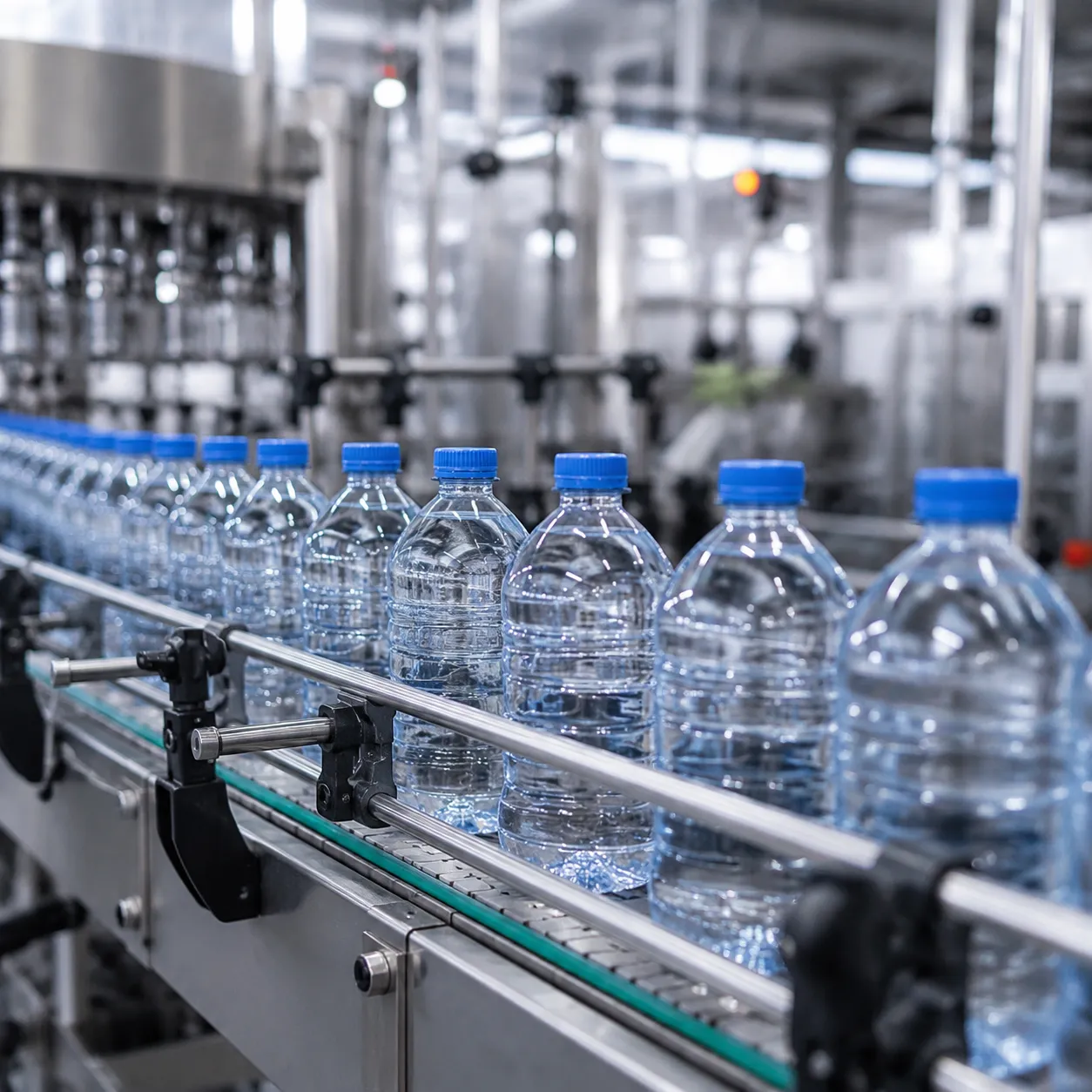
Upstream preform loading and downstream air-conveyor sync keep the SBM cell matched to filler accumulation without line stoppages.
Upstream & Downstream Synchronization
- Upstream feeding: Automatic preform loader systems feed heating zones with jam detection.
- Downstream harmony: Blown pet containers transfer to rinsing, filling, and capping via air conveyors.
- Smart sensors: Line control adjusts bottles per hour (BPH) capacity dynamically based on filler backlog.
The BlowPacker 5-Step Quality Assurance Timeline
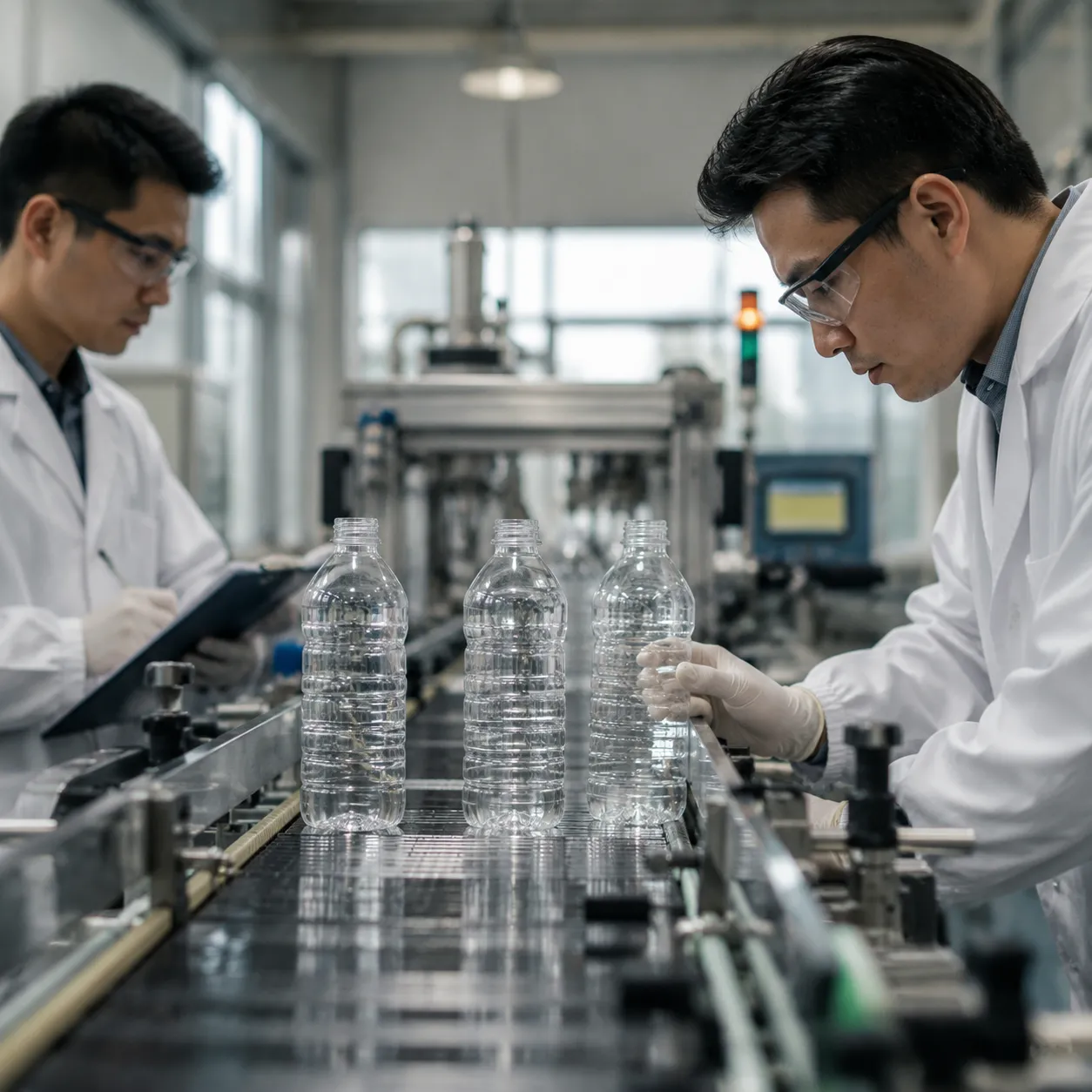
Each shipment clears a mandatory five-phase QA path before FAT sign-off at the automatic pet blow molding machine factory.
| Phase | Duration | Focus area |
|---|---|---|
| 1. Engineering alignment | Week 1–2 | Line layout, electrical configuration, mechanical tie-ins |
| 2. Precision manufacturing | Week 3–8 | Servo-driven stretch blow molding module assembly |
| 3. In-house factory testing | Week 9 | Dry and wet tests on customer preforms to hit BPH targets |
| 4. On-site integration | Week 10–11 | Installation, utilities, upstream/downstream sync |
| 5. Sign-off & training | Week 12 | Operator training, safety validation, smart factory handover |
Ordering Information for Automatic PET Blow Molding Programs
Standard SBM configurations typically ship in 60–90 days; custom molds, rotary tiers, or full turnkey integration run 90–120 days from drawing approval to FAT. Linear models in the 2–3 month window; high-capacity rotary lines with downstream packaging integration may extend toward 4–6 months.
As an automatic pet blow molding machine factory, BlowPacker also supports distributor and OEM programs for automatic pet blow molding machine manufacturers and automatic pet blow molding machine suppliers bundling multiple cavity counts on one purchase order — high-volume bulk sourcing above 6,000 BPH is scoped on the automatic stretch blow molding machine wholesale tier.
RFQ checklist
- Preform profiles: Weight, neck dimensions, and drawings.
- Bottle blueprints: Shapes and volumes from 100 ml to 20 L.
- Capacity targets: Required bottles per hour (BPH) capacity and preferred cavities.
- Utility baseline: 460 V / 3-phase / 60 Hz power, high-pressure air, and chilled-water availability.
Request a quote with the checklist above to lock a production slot and receive a tailored SBM configuration.
FAQs: Automatic Blow Molding Machine for PET Bottles
What is the typical lead time for a custom BlowPacker automatic blow molding machine?
Standard configurations for an automatic blow molding machine for pet bottles ship within 60 to 90 days. Custom engineering, specialized bottle molds, or turnkey line integration generally take 90 to 120 days from design approval to factory acceptance testing (FAT).
When should buyers choose semi-automatic vs fully automatic PET blow molding?
Semi-automatic cells suit startup tiers below roughly 1,200 bph where operators load preforms by hand. Fully automatic SBM lines fit multi-SKU beverage and personal-care plants that need 3,000+ bottles per hour, quick mold changeovers, and downstream conveyor sync without manual handling.
Can these machines process 100% recycled PET (rPET)?
Yes. Advanced heating zones adjust for varying thermal properties of rPET preforms while maintaining production capacity and bottle clarity on every fully automatic bottle blowing machine tier.
How does the cloud-connected remote diagnostic system work?
The smart factory platform tracks PET stretch blow moulding (SBM) equipment in real time. Authorized support can adjust servo parameters and isolate faults remotely to limit downtime.
Do you offer retrofits for existing factory layouts and older blow molding lines?
Compact linear SBM layouts drop into existing floorspace and sync with upstream preform loaders or downstream air conveyors on legacy lines.
What utility connections are required for installation?
A high-efficiency two-step stretch blow molding process cell typically requires:
Electrical: 460 V / 3-phase / 60 Hz.
High-pressure air: 30–40 bar for blowing (reduced with air recovery) plus 7–10 bar for low-pressure pneumatics.
Chilled water: 10–12 °C supply to cool molds and sustain peak bottles per hour (BPH) capacity.