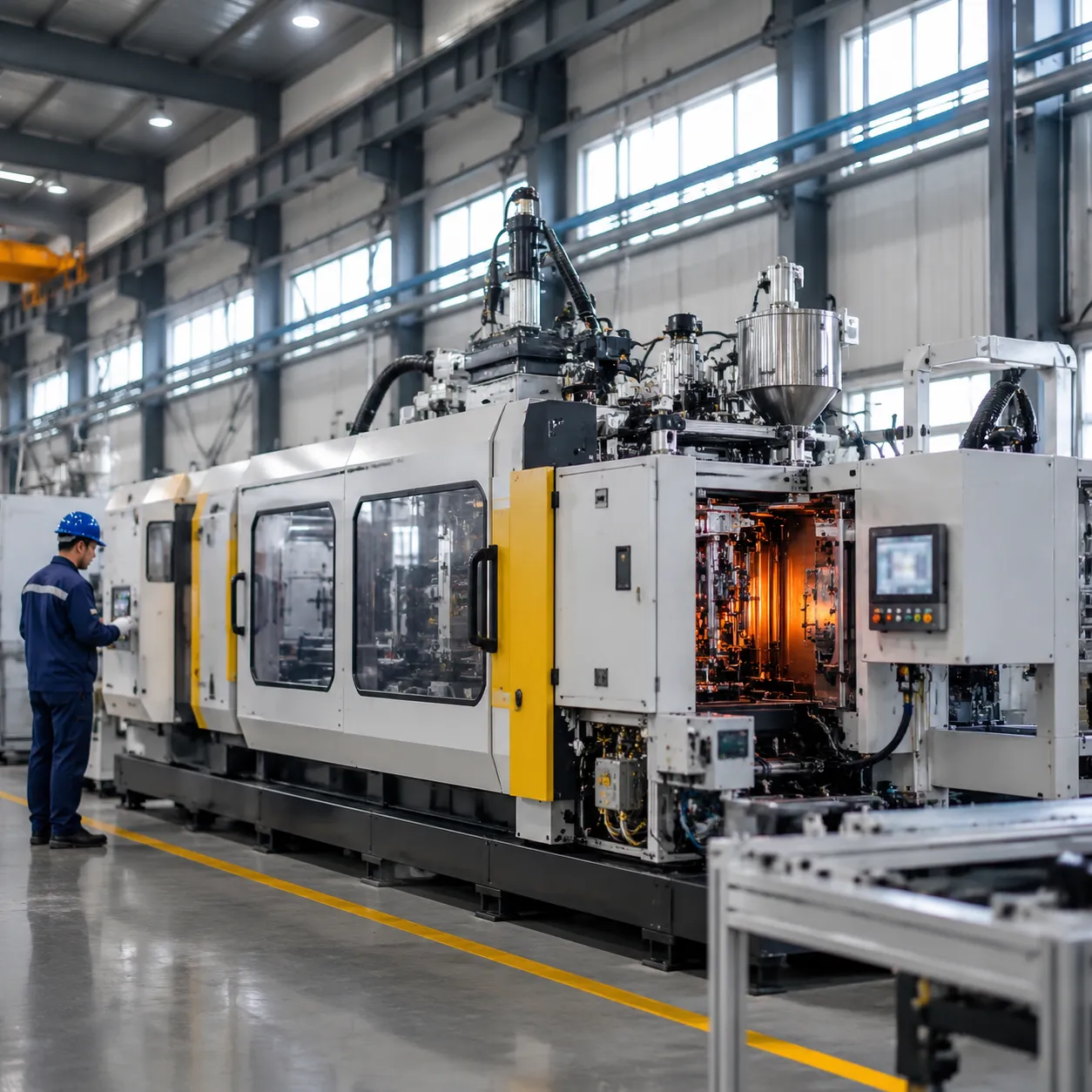

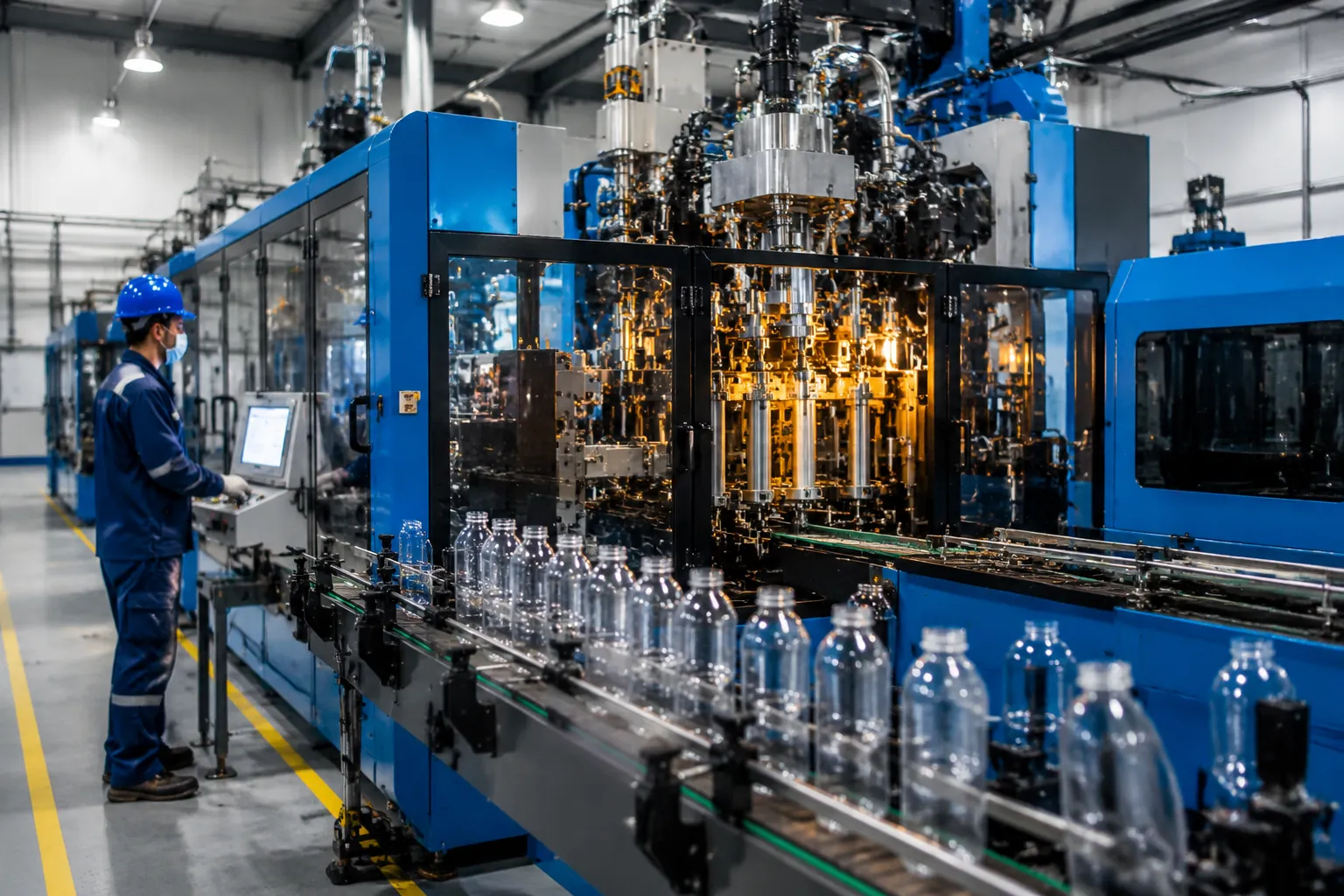
The automatic blow molding machine process heats PET preforms in an infrared lamp tunnel, clamps molds, stretches with a stretching rod, and inflates with staged compressed air through a blowing nozzle to form shelf-ready PET bottles. This guide explains the full automatic blow molding machine process—from plastic blow molding method selection (extrusion blow molding, injection blow molding, ISBM) through two-step blowing method timing on a production bottle blowing machine.
Below: comparison tables, core assemblies, five-step cycle, startup checks, control parameters, defect diagnostics, and line-selection notes for US packaging plants.
Plastic Blow Molding Methods in the Automatic Blow Molding Machine Process
When you are looking to scale up production, understanding the specific automatic blow molding machine process for your application is essential. Different products require different molding methods to ensure strength, clarity, and cost-efficiency. As a leading manufacturer, we specialize in tailoring these plastic blow molding technologies to fit your exact production demands.
Extrusion Blow Molding (EBM)
In extrusion blow molding (EBM), plastic is melted and extruded into a continuous hollow tube—a parison from continuous parison extrusion—see our extrusion blow molding machine lineup for HDPE and PP container lines. A cooled mold closes around the parison, and high-pressure compressed air is injected to inflate the plastic into the shape of the mold cavity.
- Best Used For: High-density polyethylene (HDPE), polypropylene (PP), and PVC bottles.
- Common Applications: Milk jugs, shampoo bottles, jerrycans, and large industrial drums.
- Key Advantage: Ideal for complex shapes, handles, and variable wall thickness using specialized parison programming and die heads.
Injection Blow Molding (IBM)
The injection blow molding process combines injection molding and blow molding—our injection blow molding machine options target small-format pharmaceutical and cosmetic vials. The plastic is first injection-molded into a solid preform with a fully finished bottle neck. The preform is then transferred to a blow mold where it is inflated to its final shape.
- Best Used For: Small, high-precision plastic containers.
- Common Applications: Pharmaceutical bottles, cosmetic vials, and single-serve eye dropper containers.
- Key Advantage: Eliminates bottom scrap and ensures perfect neck finishes with exact tolerances.
Injection Stretch Blow Molding (ISBM)
The injection stretch blow molding (ISBM) technique builds upon standard IBM by introducing a stretching rod. During the two-step blowing method, a PET preform is heated in an infrared lamp tunnel, transferred to the mold clamping area, and then mechanically stretched vertically by a rod while simultaneously being blown horizontally with compressed air.
| Feature | Extrusion Blow Molding (EBM) | Injection Stretch Blow Molding (ISBM) |
|---|---|---|
| Primary Material | HDPE, PP, PVC | PET |
| Formation Type | Continuous parison extrusion | Prefabricated PET preform |
| Stretching | Pneumatic inflation only | Mechanical bidirectional stretching + air |
| Clarity & Strength | Matte/Opaque, Standard strength | High clarity, Superior tensile strength |
| Typical Product | Detergent jugs, milk cartons | PET bottle for water, soda, and juice |
Choosing between extrusion blow molding vs. injection stretch blow molding comes down to your material choice and structural requirements. For high-output beverage production, a fully automatic bottle blowing machine utilizing ISBM offers the best speed, clarity, and material savings for the US market.
Core Components of the Automatic Blow Molding Machine Process
Behind every high-quality PET bottle is a synchronized system of heavy-duty parts engineered to run continuously with minimal human intervention.
Here are the critical assemblies that drive our full automatic blow molding machine process:
The Smart PLC Control Center
This is the brain of the entire operation. Our advanced PLC automated control panel monitors every single variable in real-time—from pressure adjustments to timing cycles. It ensures that the pneumatic and hydraulic integration works in perfect harmony, giving you total command over production consistency.
The Automated Preform Hopper & Elevator
Manual loading slows down production and introduces contamination risks. Our system uses a heavy-duty elevator to lift bulk quantities of PET preforms into an orientation sorter. The sorter aligns them correctly and feeds them into the heating rail without jams or interruptions.
The Infrared Preheating Tunnel
Achieving the perfect bottle requires precise temperature management. Our PET preform heating system utilizes a highly efficient infrared lamp configuration. It heats the preforms evenly as they rotate, which is vital for achieving optimal wall thickness uniformity control during the final blow.
The Clamping and Stretching Assemblies
This is where the physical transformation happens. The components work together in a tight window:
Mold Clamping Unit: High-pressure toggles lock the mold halves together instantly to withstand the massive force of inflation.
Stretching Rod: Mechanically drives down into the preform to guide the bidirectional stretching process.
Blowing Nozzle: Delivers the high-pressure compressed air that forces the hot plastic to take the exact shape of the mold cavity.
Step-by-Step Breakdown of the Fully Automatic Blow Molding Process
Understanding the automatic blow molding machine process is key to optimizing your production line efficiency. Here is exactly how a raw preform transforms into a high-quality finished bottle on a fully automatic line.
Step 1: Automated Feeding and Preform Orientation
The process kicks off at the bulk hopper. Automated preform loading and ejection systems take over immediately.
Preforms are dumped into a large hopper.
An elevator carries them up to an orientation rails system.
The system automatically aligns the preforms neck-side up, ensuring they feed into the heating zone perfectly every time.
Step 2: Precision Preform Heating (The Preheating Process)
Once aligned, the preforms enter the PET preform heating system. This is a critical stage for ensuring wall thickness uniformity control.
Preforms rotate continuously as they pass through an infrared heating lamp configuration.
The preheating process warms the plastic body to its ideal stretching temperature while keeping the threaded bottle neck cool and protected.
Step 3: Transfer to the Mold Clamping Unit
After exiting the heating tunnel, high-speed mechanical grippers grab the hot preforms.
The grippers transfer the preforms directly into the mold clamping unit.
Our advanced mold clamping unit efficiency ensures the heavy molds lock together tightly in milliseconds, ready to withstand intense blowing pressures.
Step 4: Bidirectional Stretching and Multi-Stage Blowing
This is where the actual plastic blow molding magic happens. It relies on a precise two-step blowing method:
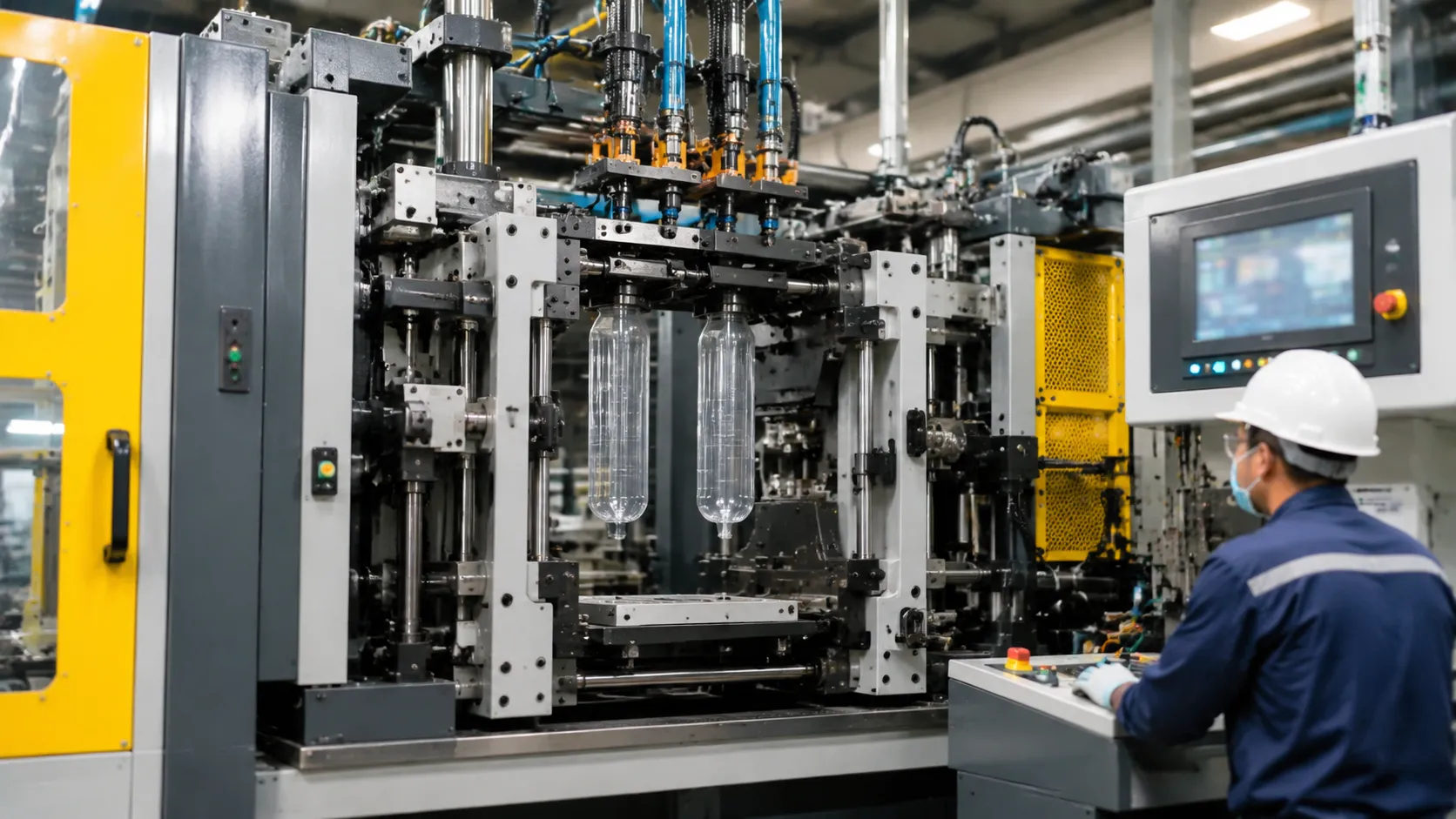
Stretching: A mechanical stretching rod pushes down inside the preform to stretch it vertically, maintaining the correct bidirectional stretching ratio.
Low-Pressure Blow: A blowing nozzle introduces low-pressure air to start expanding the material.
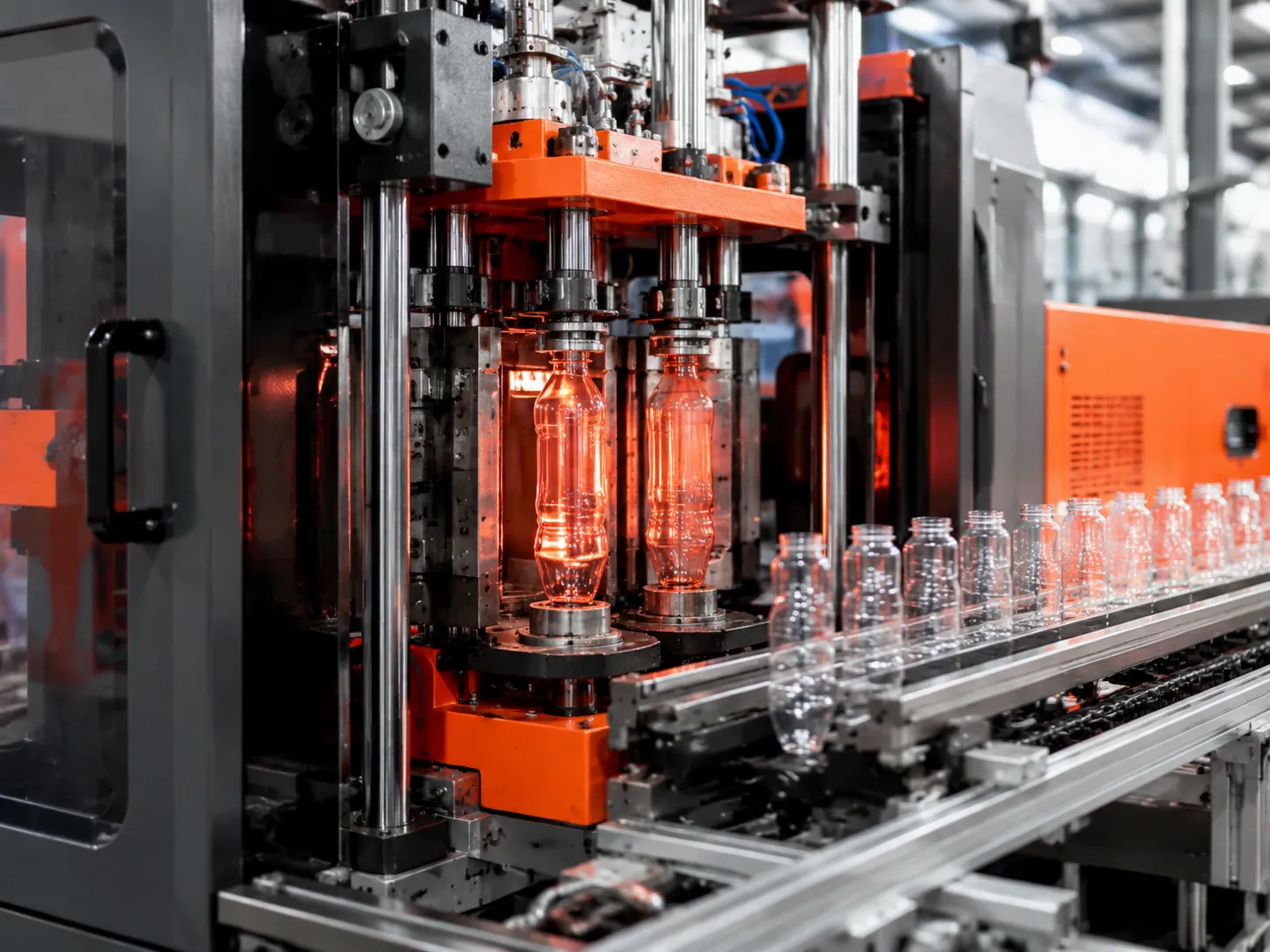
High-Pressure Blow: A high-pressure compressed air system delivers a massive blast of air, forcing the plastic completely against the cooled mold walls to lock in the final PET bottle shape.
Step 5: Rapid Cooling, Solidification, and Automatic Ejection
To maintain high-speed multi-cavity mold cycle time, the bottle must cool instantly.
Chilled water circulates through the mold, rapidly solidifying the hot plastic.
The mold halves split open, and the mechanical hands automatically eject the finished bottles onto a conveyor belt.
The entire full automatic blow molding machine process takes only a matter of seconds, delivering flawless, shelf-ready packaging at maximum speed.
Automatic Blow Molding Machine Process Parameters & Quality Control
Achieving flawless consistency in the automatic blow molding machine process requires precise control over critical mechanical and thermal variables. When we manufacture and supply these advanced systems to the US market, we focus heavily on fine-tuning these parameters to ensure maximum wall thickness uniformity control and eliminate structural defects.
The Bidirectional Stretching Ratio
The bidirectional stretching ratio is the core metric governing the mechanical strength of a PET bottle. This variable measures how much a PET preform is stretched both axially (lengthwise via the stretching rod) and hoop-wise (circumferentially via compressed air).
- Axial Stretch: Controlled by the speed and stroke of the mechanical stretching rods.
- Hoop Stretch: Driven by the expansion of the high-pressure air inside the mold cavity.
- The Sweet Spot: Balancing these two ratios ensures the plastic molecules align correctly, maximizing top-load strength and impact resistance while minimizing material waste.
Thermal Profile Management
A highly stable PET preform heating system is non-negotiable for high-speed production. Within the preheating process, we use a customized infrared heating lamp configuration to establish a precise thermal profile across the preform body.[2]
| Preform Zone | Thermal Requirements | Impact on Quality |
|---|---|---|
| Neck/Finish | Kept cool via cooling channels | Prevents thread deformation |
| Body/Wall | Graduated heat tracking | Ensures uniform material distribution |
| Base/Bottom | Carefully controlled lower heat | Avoids bottom warping or gate off-centering |
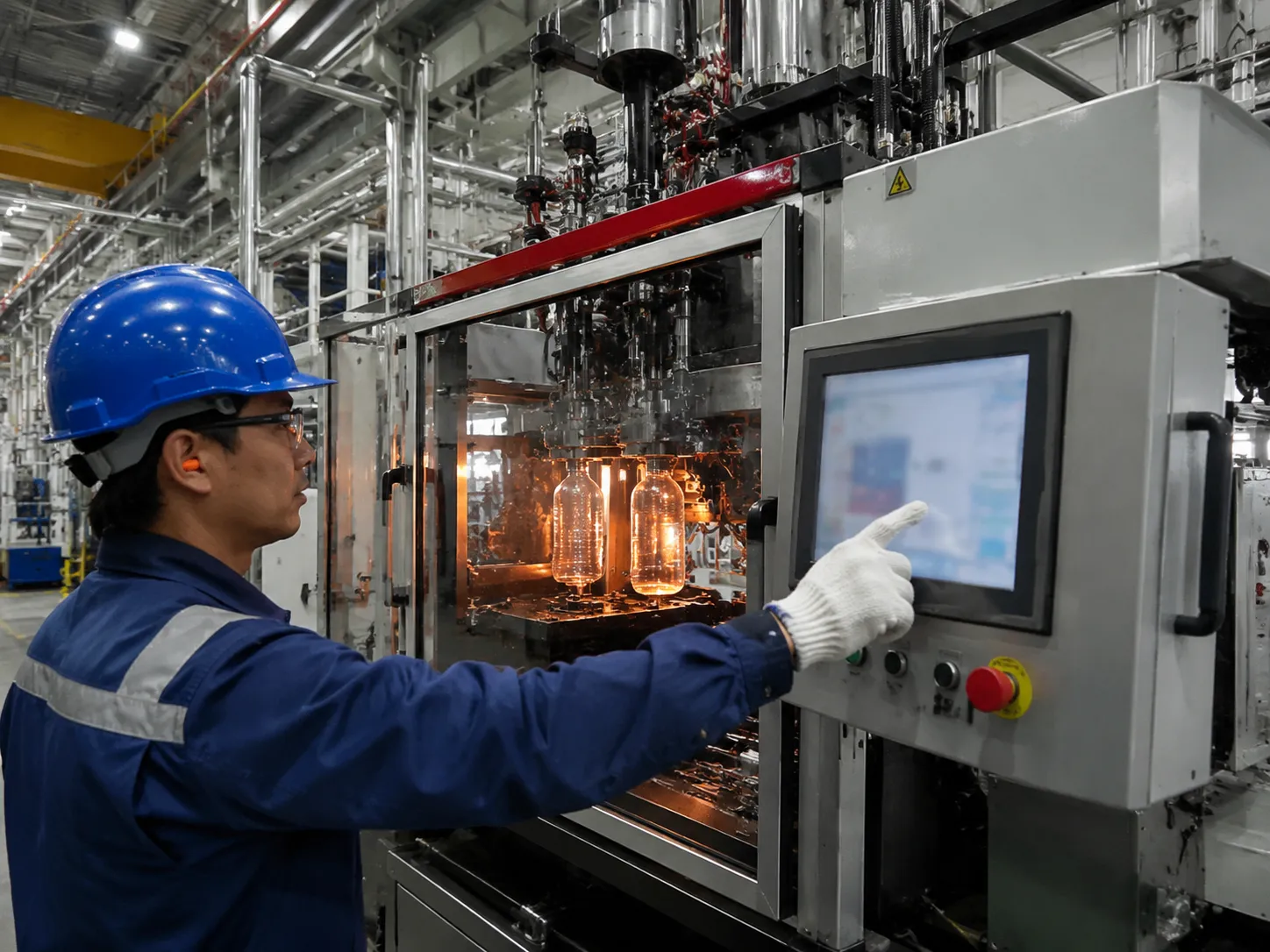
Air Pressure and Timing Synchronization
The synchronization between the mechanical stretch and the high-pressure compressed air system dictates the final layout of the plastic container. Our PLC automated control panel manages this down to the millisecond through a strict two-step blowing method.
- Low-Pressure Pre-Blowing: Introduced while the stretching rod is moving down. This expands the preform gently to prevent it from rubbing against the cold mold walls too early.
- High-Pressure Main Blowing: Triggered the moment the rod reaches the bottom. This snaps the plastic into the intricate details of the mold clamping unit, locking in the final shape and ensuring a flawless surface finish.
Line Startup, Safety Checks & Daily Operation for Automatic Blow Molding
Before the full automatic blow molding machine process reaches full multi-cavity mold cycle time, operators run a structured startup on the bottle blowing machine line.
- Hydraulic and servo power: Open main oil pump, servo pump, and winch per OEM checklist; confirm pneumatic and hydraulic integration pressure is stable.
- Preheat verification: Ramp infrared lamp zones sequentially; verify PET preform heating system profiles match each SKU preheating process recipe.
- Compressed air readiness: Bleed low- and high-pressure lines; confirm the high-pressure compressed air system meets setpoint before mold engagement.
- Mold and safety interlocks: Inspect mold clamping unit alignment; test guards and ejection paths before automatic mode.
Daily checks mirror this sequence: log PLC automated control panel alarms, clean blowing nozzle faces, and run one dry cycle before loading PET preforms at rate.
Troubleshooting Common Automated Defects on the Factory Floor
When you run a high-speed automatic blow molding machine process, unexpected defects stall your production lines and eat into your margins. As a manufacturer, we know that hitting your daily yield requires dialing in your plastic blow molding variables perfectly. If your bottle blowing machine starts kicking out rejects, use this quick diagnostic guide to fix the issues immediately.
Uneven Wall Thickness
Wall thickness uniformity control fails when the preform is not heated evenly or when the stretching mechanics are misaligned. This leaves one side of your PET bottle structurally weak.
- The Cause: Poor infrared heating lamp configuration or a failing stretching rod. If one side of the preform enters the mold hotter than the other, it stretches faster and thins out.
- The Fix: Check your PET preform heating system. Adjust the power percentages on individual infrared lamp zones. Ensure the preforms are rotating smoothly as they pass through the preheating process.
Bottom Warping or Folding
A deformed base prevents the bottle from standing upright on retail shelves, rendering the batch useless for US consumer packaging standards.
- The Cause: Insufficient cooling time inside the mold clamping unit or incorrect timing from the high-pressure compressed air system. The plastic is still too hot when ejected, causing the base to collapse or warp under its own residual heat.
- The Fix: Increase the cooling water flow through the mold. Use your PLC automated control panel to adjust the delay timing, ensuring the high-pressure blowing nozzle delivers air long enough to freeze the plastic against the chilled mold walls before ejection.
Deformed Bottle Necks
If the bottle neck or threads warp, the caps will not seal correctly, leading to leaks and costly product recalls.
- The Cause: Excessive heat bleeding into the neck area during the preheating process. The neck finish must remain cool and rigid throughout the entire full automatic blow molding machine process.
- The Fix: Inspect the cooling water channels on the preform shields inside the heating oven. Position the first infrared lamp zone slightly lower to protect the neck threads from direct radiant heat, ensuring only the body of the preform softens.
Quick Diagnostic Checklist
| Defect Type | Primary Suspect Component | Immediate Corrective Action |
|---|---|---|
| Thin Walls | Heating Oven / Stretch Rod | Re-calibrate infrared lamp zoning; check rod alignment. |
| Base Warping | Cooling System / Air Timing | Lower mold cooling water temperature; extend high-pressure air hold time. |
| Neck Distortion | Neck Cooling Shield | Increase water flow to the neck protection plates in the oven. |
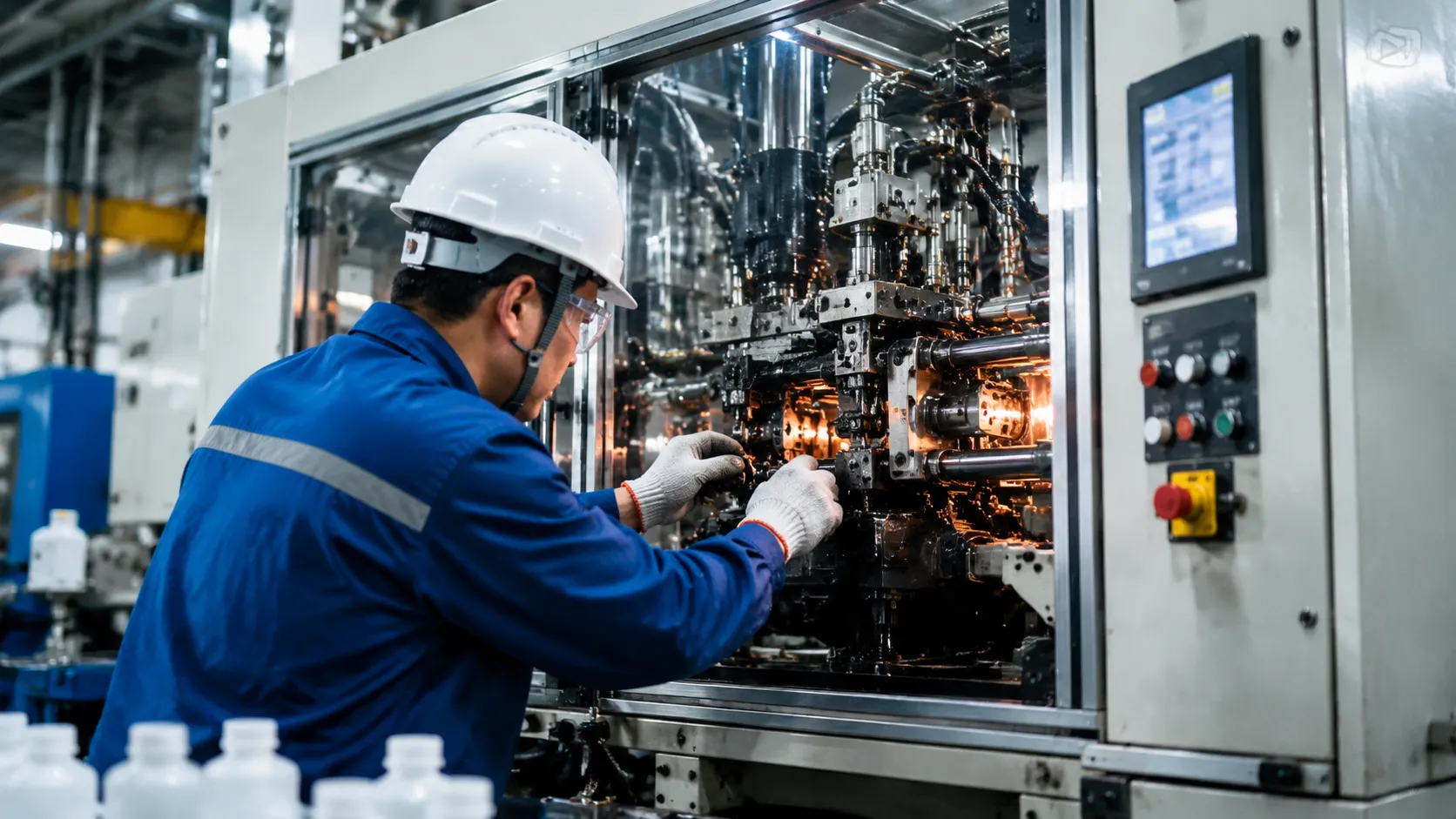
The BlowPacker Advantage: Future-Proofing Your Packaging Line
Our automatic blow molding machine platforms are built for high-output plastic bottle manufacturing—see also plastic bottle manufacturing solutions for turnkey line planning.
Energy-Efficient Heating Architecture
Traditional plastic blow molding setups waste massive amounts of electricity just trying to keep temperatures stable. We engineered a smarter PET preform heating system that changes the game.
- Targeted Infrared Lamp Configuration: Our ovens heat the preforms, not the entire room.
- Intelligent Thermal Zoning: You get precise preheating process control, often reducing energy consumption compared to legacy oven layouts.[1]
- Instant Optimization: Eliminates structural weak spots in the plastic while using a fraction of the power.
High-Speed Multi-Cavity Output
Time is money on a US production floor. Our systems maximize throughput without sacrificing wall thickness uniformity control.
| Feature | Production Benefit |
|---|---|
| Multi-Cavity Mold Cycle Time | Drops cycle times to the absolute minimum for fast turnaround. |
| Pneumatic and Hydraulic Integration | Ensures lightning-fast mechanical responses during high-speed runs. |
| Precision Blowing Nozzle | Delivers rapid, consistent airflow for perfect PET bottle formation every single cycle. |
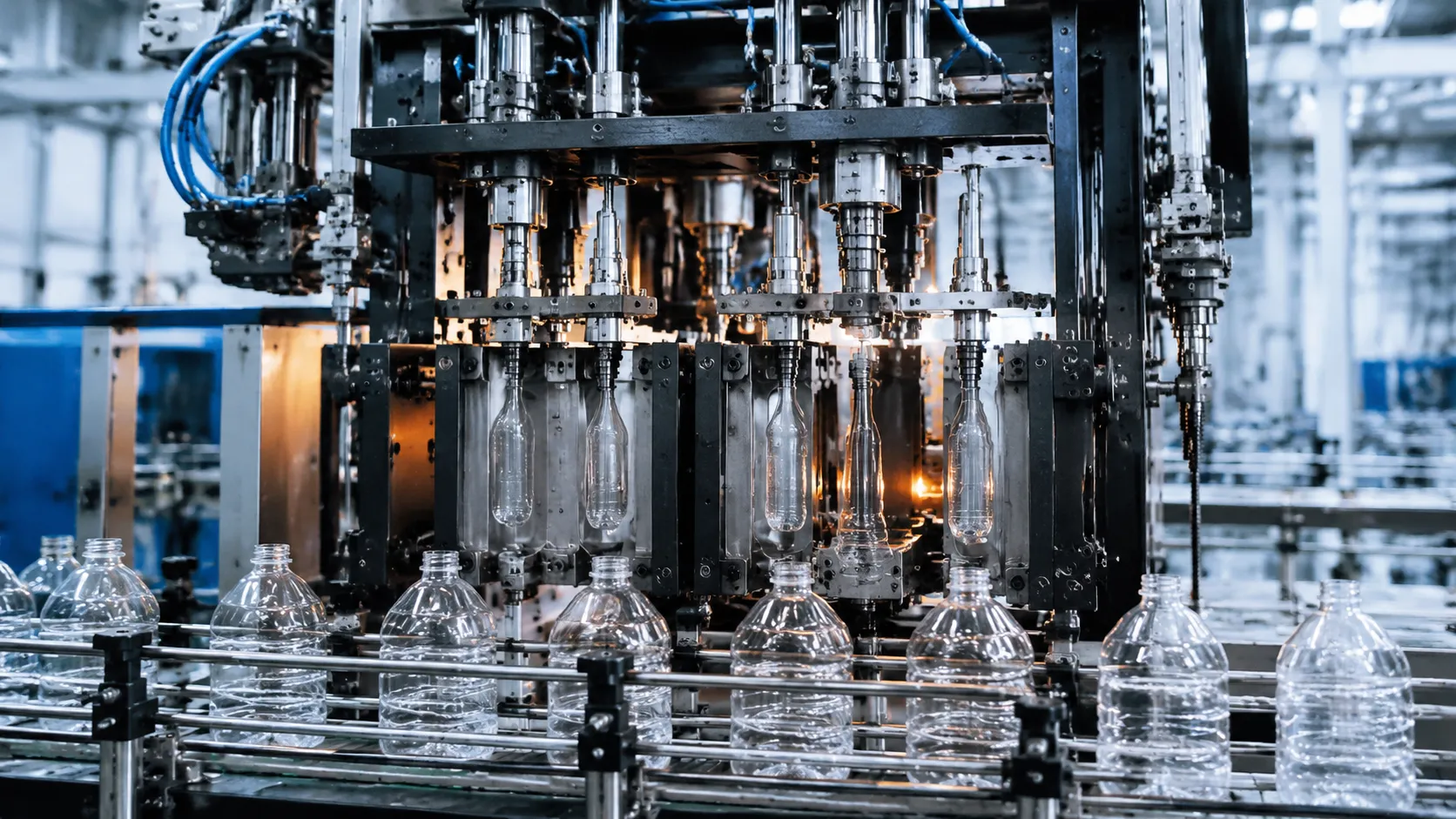
Reduced Downtime
We know that a stopped line is a cash drain. That is why we built our machines with rugged, accessible components that keep maintenance simple and predictable.
- Smart PLC Automated Control Panel: Spot issues, adjust parameters, and track your automatic blow molding machine process in real time with an intuitive, user-friendly interface.
- Seamless Automated Preform Loading and Ejection: Reduces mechanical wear and tear, preventing jams before they happen.
- Heavy-Duty Mold Clamping Unit Efficiency: Built to withstand constant, high-pressure operation with minimal maintenance requirements.
Frequently Asked Questions (FAQs)
What is the cycle time of a multi-cavity automated blow molding machine?
For a modern fully automatic bottle blowing machine, the multi-cavity mold cycle time typically ranges between 2 to 5 seconds per cycle.[1] This speed depends heavily on the bottle volume, the number of cavities, and your mold clamping unit efficiency.
How do you maintain wall thickness uniformity in automated systems?
Achieving consistent wall thickness uniformity control relies on precise PET preform heating system calibration and exact stretching speeds.
We utilize a three-pronged approach to guarantee perfection:
Infrared heating lamp configuration: Zoned heating ensures the preform neck, body, and bottom reach their exact optimal temperatures.
Parison programming and die heads: Precision control over material distribution before the blowing phase.
Servo-driven stretching rods: Constant speed stretching prevents thin spots or weak bases.
What is the difference between EBM and ISBM in automatic production?
Choosing between extrusion blow molding (EBM) and injection stretch blow molding (ISBM) comes down to your material choice and container design.
| Feature | Extrusion Blow Molding (EBM) | Injection Stretch Blow Molding (ISBM) |
|---|---|---|
| Primary Materials | HDPE, PP, PVC | PET |
| Process Style | Continuous parison extrusion | Two-step blowing method (Preform first) |
| Stretching | Pneumatic blowing only | Bidirectional stretching (Rod + Air) |
| Best Used For | Jerrycans, shampoo bottles, handles | PET bottle production (Water, soda) |
How does high-pressure compressed air system affect bottle quality?
The high-pressure compressed air system is the backbone of the automatic blow molding machine process. If the pressure drops or timing syncs poorly, the plastic blow molding cycle fails to push the material completely into the mold cavities.
Proper high-pressure air integration delivers:
Flawless surface finish: Sharp, clear logos, text, and design contours on the bottle.
Structural integrity: Even material distribution that prevents structural collapses during filling.
Fast cycle times: Rapid inflation speeds up the overall bottle blowing machine output.