
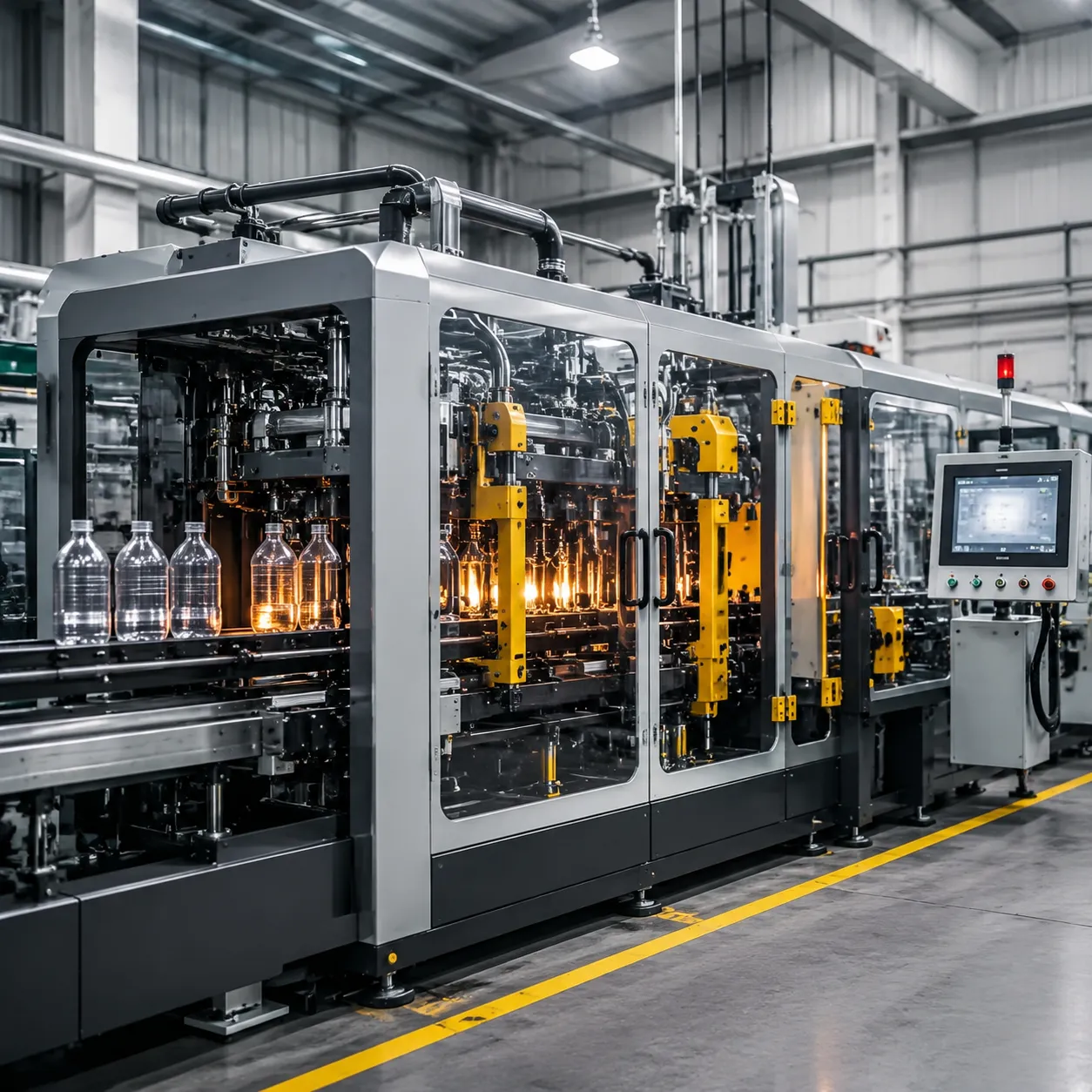
Overview
High-Performance Automated PE Bottle Production
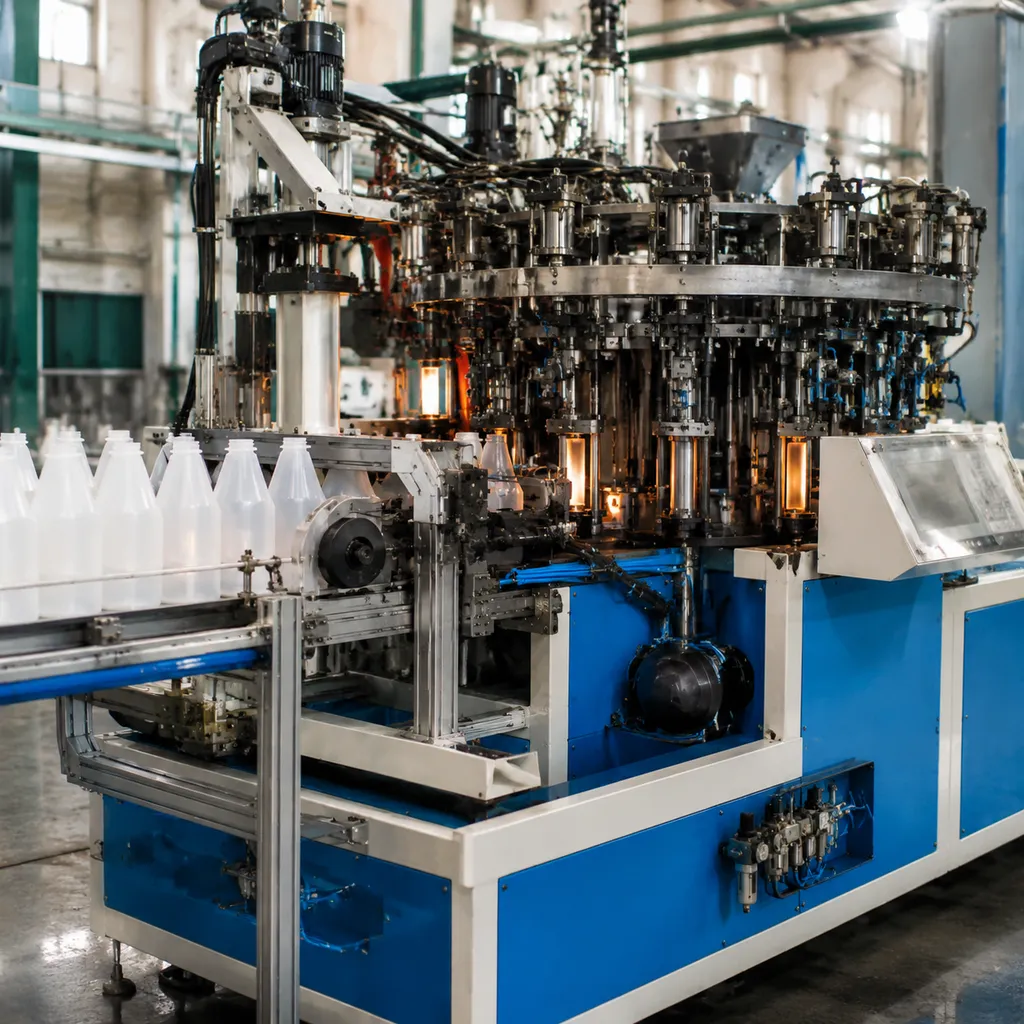
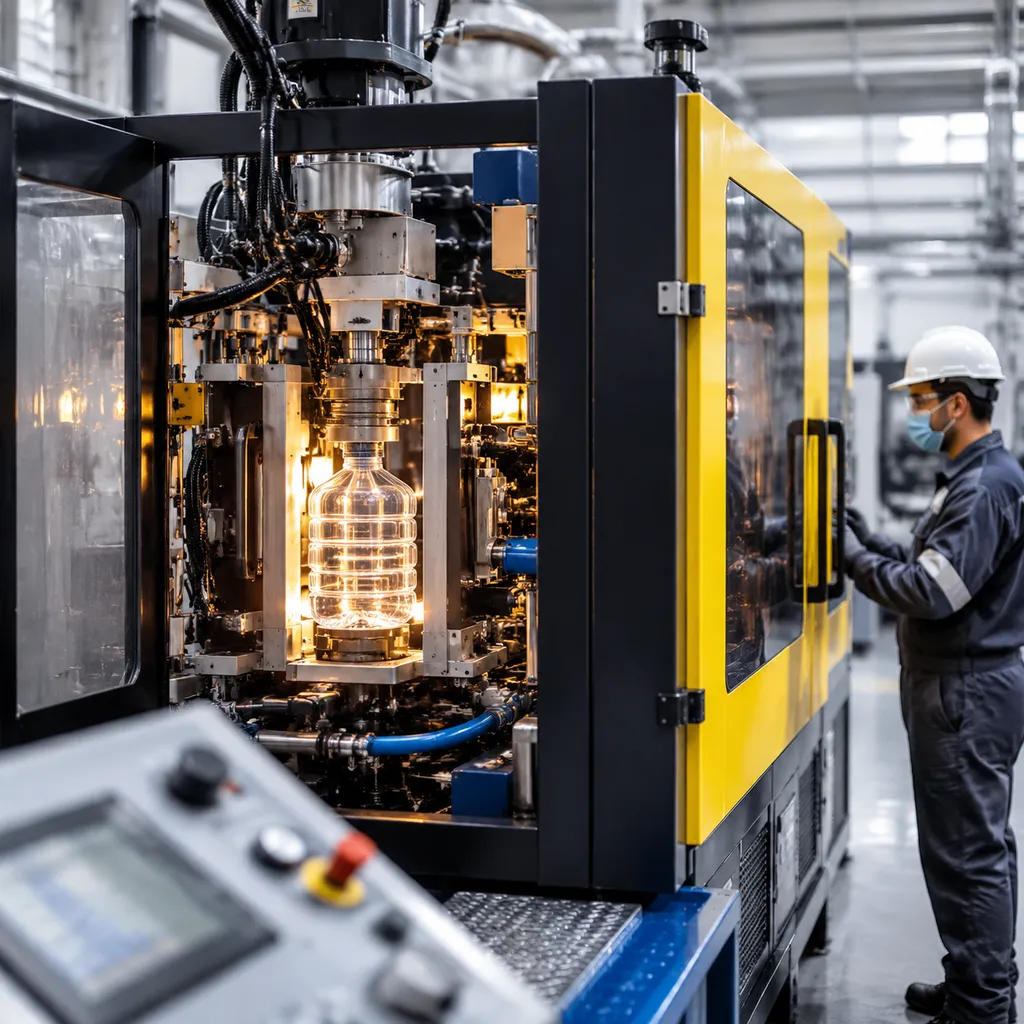
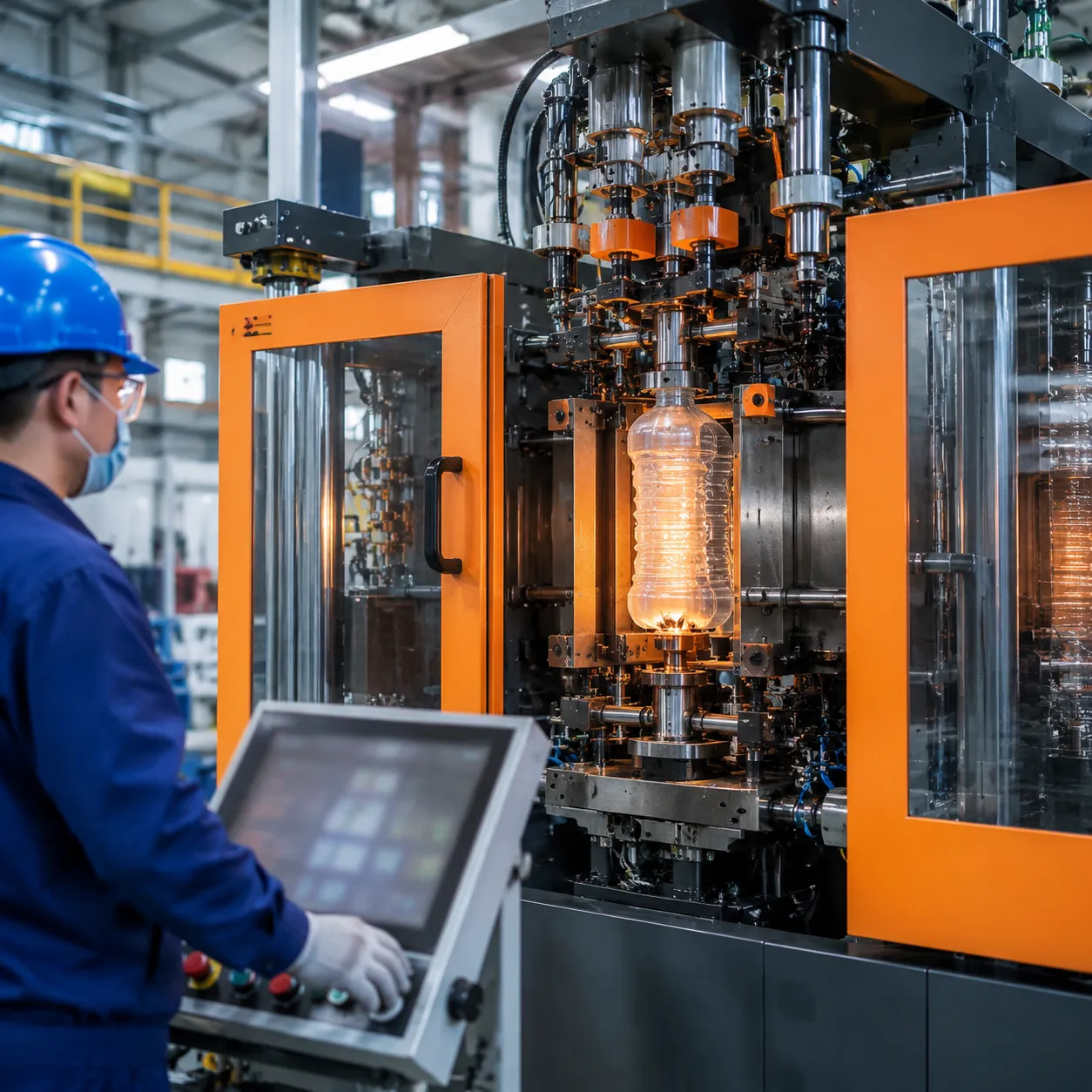
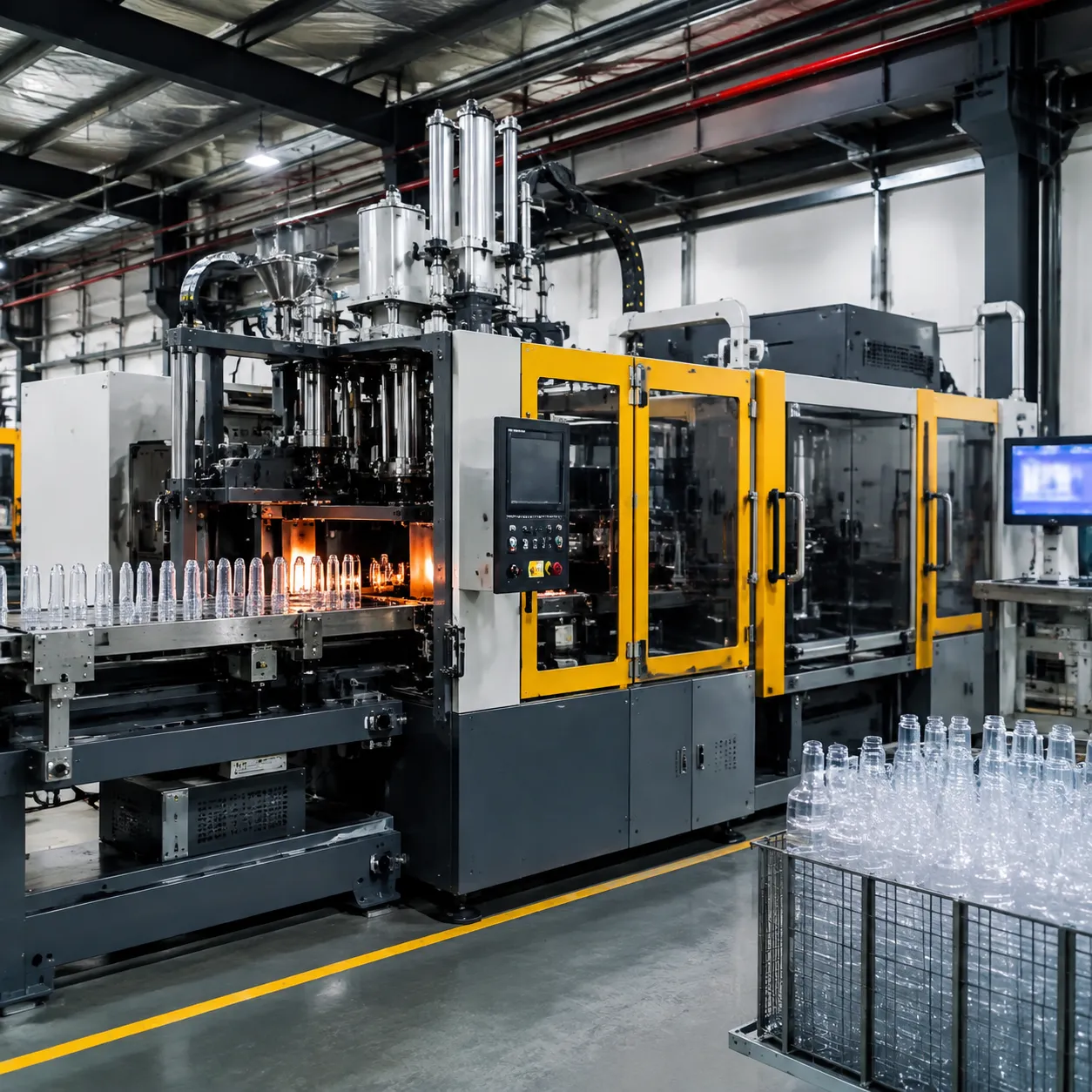
Resin price swings, power tariffs, and floor-space limits usually pull a packaging line in three directions at once. An automatic pe bottle blow molding machine factory setup is built to hold those variables steady: continuous parison extrusion feeds multi-cavity clamping, and programmed wall-thickness control keeps HDPE/LDPE containers within spec from 100ml personal-care formats through 30L drum and jerrycan programs.
Lines ship ready for smart factory integration — modular automatic EBM equipment with all-servo motor drive zones, recipe storage, and footprint options that let a plastic container manufacturer scale output without rebuilding the hall layout.
Output bands by container class
Configured bottles per hour (BPH) targets map to three container bands rather than a single headline rating:
- 100ml – 1L: Multi-cavity six-chamber or 6-cavity extrusion blow mold layouts pushing peak bph on small personal-care and dairy bottles.
- 2L – 5L: Stable mid-volume runs with handle geometry and custom neck profiles.
- 10L – 30L: Heavy clamping, single- or dual-cavity setups for drums, jerrycans, and bulk chemical packaging.
Factory-line value drivers
Three engineering choices recur on US-bound factory quotes:
- Servo-first motion: The all-servo blow molding system draws power only on stroke — often 30–40% less electricity than legacy hydraulics.
- Resin flexibility: HDPE, LDPE, and PCR blends run without sacrifice to cycle time or parison stability.
- Turnkey scope: From extrusion blow mold design through install, complete blow molding solutions leave fewer interfaces for the buyer to manage — standard for a professional manufacturer factory program.
Core Technical Specifications & Cavity Configurations
Rated output and cavity layout are matched to bottle geometry first — then clamping force and parison programming follow. That sequencing is how an automatic pe bottle blow molding machine factory keeps bph (bottles per hour) high without wall-thickness drift on a multi-cavity blow molder floor.
Production Capacities (BPH Matrix)
Different container sizes require specialized configurations. The systems scale from a high-speed 6-cavity or six-chamber layout for small personal care bottles up to heavy-duty single-cavity setups for large industrial drums.
Engineering Data Table
The table below breaks down the technical capabilities of the standard extrusion blow molding machine lineup:
| Machine Configuration | Target Container Size | Cavity Count | Rated Output (BPH Matrix) | Primary Resin Compatibility |
|---|---|---|---|---|
| EBM-6C Precision | 50ml - 500ml | 6-cavity / six-chamber | 3,500 - 4,200 bph | HDPE, LDPE, PP |
| EBM-4C Standard | 500ml - 2L | 4-Cavity | 2,200 - 2,800 bph | HDPE, LDPE |
| EBM-2C Medium | 2L - 5L | 2-Cavity | 1,000 - 1,400 bph | HDPE, High-Molecular PE |
| EBM-1C Heavy Duty | 5L - 25L (PE jerrycan) | 1-Cavity | 250 - 400 bph | HDPE |
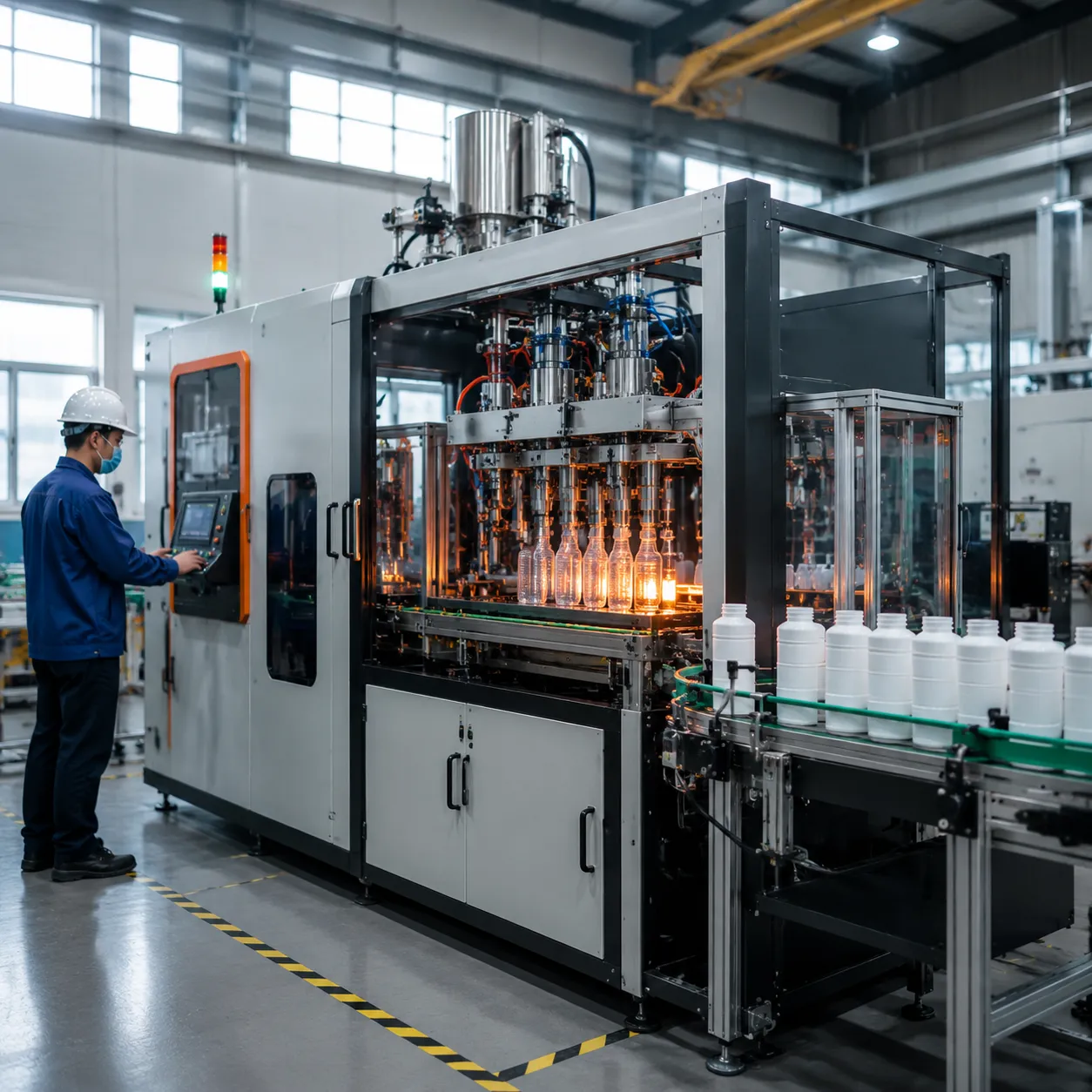
Every automatic HDPE container making machine built on this platform features an advanced parison programmed blow molder head. Real-time thickness adjustments across up to 100 points ensure optimal resin distribution and maximum top-load strength for every bottle.
Advanced Engineering & Component Architecture
Component choices on an automatic pe bottle blow molding machine factory line aim at uptime and predictable service cost — not brochure specs alone.
All-Servo Energy-Saving Architecture
Hydraulic systems are loud, messy, and consume massive power. The advanced all-servo blow molding system replaces traditional hydraulics with high-precision electric servo motor drives.
- Up to 40% Energy Savings: Drastically cuts plant electricity bills compared to older hydraulic models.
- Faster Cycle Times: Precise, repeatable mechanical movements speed up overall bottles per hour output.
- Zero Oil Contamination: Clean operation perfect for food, beverage, and medical-grade packaging.
Multi-Layer Co-Extrusion Blow Molding
Meeting strict US shelf-life and sustainability regulations requires smart material design. Multi-layer co-extrusion blow molding technology sandwiches recycled plastics between clean, virgin layers.
- High-Barrier Protection: Seals flavors in and keeps oxygen out, extending product shelf life.
- Recycled Material Integration: Up to 50% post-consumer recycled (PCR) plastic in the middle layer lowers raw material costs.
- Parison Programming: Guarantees uniform wall thickness across the entire container, eliminating thin spots.
Tier-1 Global Component Integration
The automatic EBM equipment integrates world-class, name-brand parts so maintenance teams can source spares locally.
| Component Type | Integrated Brands | Key Benefit |
|---|---|---|
| PLCs & HMI Controllers | Siemens / B&R | Intuitive control, smart factory connectivity, and reliable automation. |
| Pneumatics & Valves | Festo / SMC | Rapid response times and millions of cycles without failure. |
| Electrical Systems | Schneider Electric | Stable power distribution and easy-to-troubleshoot control cabinets. |
Custom Precision Tooling & Mold Design
Beyond primary machinery, the scope covers exact extrusion blow mold components that define structural integrity.
In-House CNC Manufacturing
Every mold is crafted inside the automatic pe bottle blow molding machine factory. High-precision, multi-axis CNC machining centers control exact tolerances of bottle designs — zero parting line defects, pristine neck finishes, and flawless parison distribution on every run.
Conformal Thermal Design
Standard cooling lines leave hot spots that warp plastics and drag down cycle times. Advanced conformal cooling channels follow the complex contours of the mold cavity.
- Faster Cycle Times: Achieves rapid, uniform heat dissipation across the entire surface.
- Flawless Bottle Geometry: Eliminates post-molding shrinkage and warping on heavy-duty containers.
- Structural Integrity: Ensures perfectly uniform wall thickness for high-stress applications like a PE jerrycan manufacturing line.
Quick Changeover Systems
Minimizing downtime is critical for modern production plants. Multi-cavity blow molder systems feature integrated quick-change mechanical and pneumatic connections that turn hours of downtime into minutes.
| Changeover Feature | Standard Mold Setups | Quick-Change System |
|---|---|---|
| Tooling Realignment | Manual calibration required | Self-centering alignment pins |
| Utility Connections | Bolt-on water lines | Quick-disconnect manifolds |
| Switchover Time | 4 to 6 Hours | Under 45 Minutes |
User-friendly engineering allows operators to swap molds safely, drastically reducing labor costs and keeping the high-speed bottle production line highly profitable.
Industry-Specific Applications
US packaging sectors differ in wall profile, barrier needs, and line speed — but each still expects repeatable bph and clean neck finishes from the same automatic pe bottle blow molding machine factory platform.
Personal Care & Household Chemicals
Shampoo, body wash, and detergent formats need label-ready surfaces plus strong handles on larger jugs. A plastic bottle blowing machine configured for cosmetics-grade gloss and top-load strength covers:
- Cosmetic bottles, soap dispensers, and 2-gallon detergent jugs
- High-gloss finishes via multi-layer co-extrusion blow molding without sacrificing drop-test performance
Industrial Packaging & Agrochemicals
Chemical and agrochemical containers face permeation risk and rough handling — thick-walled HMW-HDPE runs on a high output HDPE automatic extrusion blow molding machine are standard here:
- PE jerrycan manufacturing line setups, tight-head drums, and chemical jugs
- Multi-layer barrier stacks that resist paneling and chemical attack in transit
Food & Dairy Packaging
Sanitary processing and high hourly output must coexist on dairy and beverage lines:
- Milk jugs, juice bottles, and condiment containers
- Rapid bph (bottles per hour) throughput with optional parison sterilization for extended shelf-life SKUs
Turnkey Blow Molding Factory Solutions
A turnkey package ties resin handling, cooling, inspection, and collection into one control loop — the usual scope when buyers commission an automatic pe bottle blow molding machine factory line rather than a standalone press.
Complete Line Synchronization
Turnkey engineering ensures every piece of auxiliary equipment works in harmony with the primary automatic EBM equipment. Programs that later add thin-wall PET bottles alongside PE extrusion often integrate an automatic stretch blow molding machine line into the same unified control loop.
- Automated Material Feeding: High-precision resin conveying and dosing systems designed for continuous, dust-free operation.
- Chiller & Cooling Integration: High-efficiency cooling units matched to mold profiles to maximize cycle times.
- Downstream Automation: Seamless connection to inline leak testers, visual inspection systems, and conveyor networks.
- Centralized PLC Management: A single smart interface that monitors line speeds, balances throughput, and prevents production bottlenecks automatically.
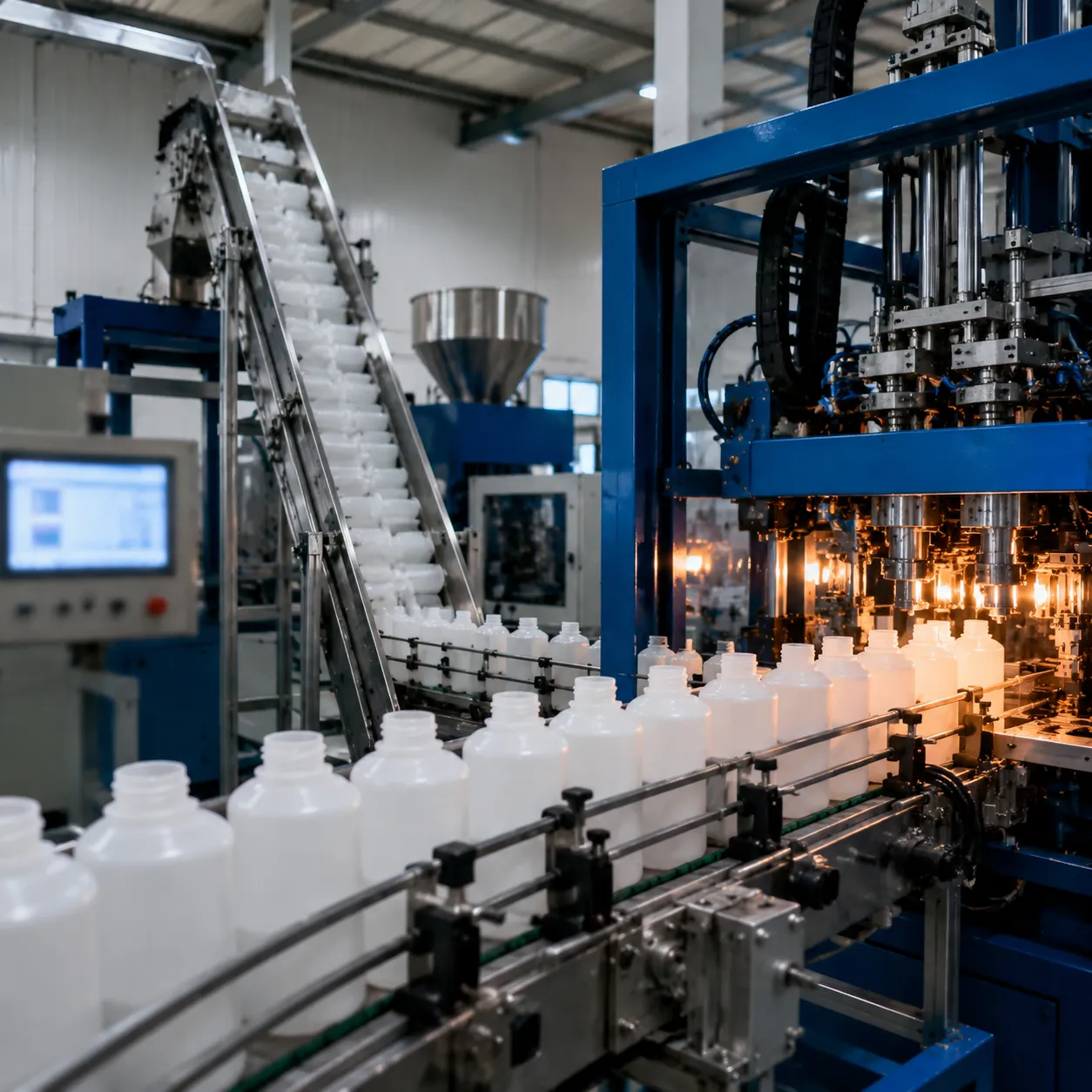
Strict Factory Acceptance Testing (FAT) & Global Technical Support
Shipment follows documented dry-cycle and wet-cycle runs — proof that each automatic EBM equipment unit meets the buyer's resin and speed brief before it leaves the automatic pe bottle blow molding machine factory floor.
100% Mandatory Pre-Shipment Testing
Every plastic bottle blowing machine undergoes a rigorous, 48-hour continuous dry-cycle and wet-cycle testing protocol. Exact production conditions using specified PE resins guarantee peak performance upon arrival.
- Dry-Cycle Calibration: Verifies high-speed mechanical synchronization and clamping force consistency.
- Load Testing: Continuous parison extrusion and bottle blowing at maximum production capacities.
- Leak & Deflash Inspection: 100% validation of integrated trimming and bottle integrity.
Certifications & Compliance
Manufacturing processes and equipment fully comply with international and US safety and quality frameworks.
| Standard / Certification | Compliance Focus | Operational Benefit |
|---|---|---|
| CE Certified | Safety & Environmental | Globally recognized safety compliance |
| ISO 9001:2015 | Quality Management | Consistent engineering and component traceability |
| UL / CSA Compliant Components | Electrical Systems | Seamless integration into US power grids |
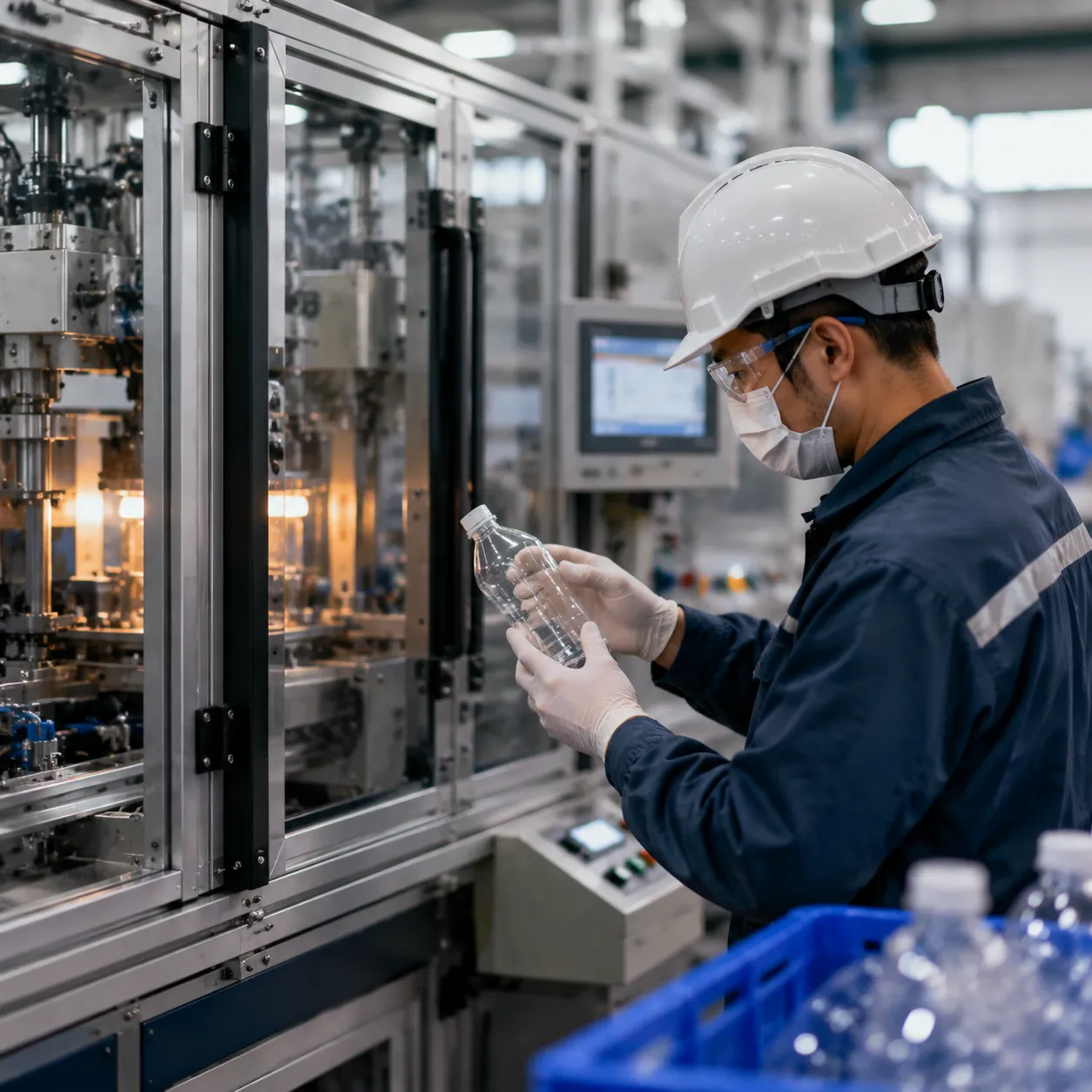
Global Commissioning & Lifecycle Support
Field engineers deploy directly to buyer facilities for seamless installation, startup, and team training. Turnkey blow molding factory solutions include ongoing lifecycle support to maximize uptime and keep the high-speed bottle production line running efficiently.
- On-Site Commissioning: Complete mechanical setup, electrical hookup, and fine-tuning.
- Operator Training: Hands-on instruction covering parison programming, mold changes, and routine maintenance.
- 24/7 Remote Diagnostics: Immediate troubleshooting via smart factory connectivity to minimize unplanned downtime.
Ordering & Procurement for Automatic PE Bottle Blow Molding Machine Factory Programs
Buyers evaluating an automatic pe bottle blow molding machine for sale compare lead time, cavity count, FAT documentation, and after-sales coverage alongside unit price. Standard EBM lines ship from the BlowPacker factory in China with remote commissioning, spare-part kits, and complete blow molding solutions for US and export buyers.
Programs scoped through distributor channels often align with the automatic PE bottle blow molding machine supplier EBM catalog before factory-direct commissioning is finalized. Typical lead time runs 60–90 days for standard machinery; custom extrusion blow mold tooling adds 30–45 days concurrent with assembly. MOQ is typically one complete line; tiered pricing applies for multi-unit automatic pe bottle blow molding machine manufacturer rollouts.
As a dedicated PE extrusion professional manufacturer, BlowPacker supports factory acceptance testing, line integration planning, and program scoping for plastic container manufacturer upgrades. Request a quote with target bottle volume, resin type, and cavity count for a configuration summary within 24–48 hours.
Frequently Asked Questions (FAQs)
How much energy does an all-servo blow molding system save compared to traditional hydraulics?
The all-servo blow molding system cuts energy consumption by 30% to 50% compared to hydraulic machines. Because servo motor drives only draw power when moving, constant idling energy from hydraulic pumps is eliminated. For a high-speed bottle production line running 24/7 in the US, this translates directly to thousands of dollars saved on monthly utility bills.
Can this automatic PE bottle blow molding machine factory handle both HDPE and LDPE resins?
Yes. The automatic pe bottle blow molding machine factory platform engineers systems with universal screws and precise temperature controls that seamlessly process both HDPE and LDPE resins. Whether running rigid industrial jerrycans or flexible squeeze bottles, extrusion blow molding machine setups maintain stable parison weight and excellent wall distribution.
What is the typical changeover time for a multi-cavity blow molder configuration?
Multi-cavity blow molder units feature quick-change mold platens and accessible extrusion heads to minimize downtime:
- Complete mold change: Under 2 hours
- Parison die adjustment: 15 to 30 minutes
- Color/Resin switch: 30 to 45 minutes using optimized purging screw design
Do automatic EBM equipment packages include turnkey plant installation and auxiliary systems?
Complete turnkey blow molding factory solutions bundle all necessary auxiliary systems with every automatic EBM equipment package:
- Chiller and cooling tower integration
- Automatic resin loading and gravimetric dosing systems
- Inline leak testers, de-flashing units, and take-out robots
- Air compressors tailored to specific bph (bottles per hour) requirements
When should buyers choose extrusion blow molding over a stretch blow molder for PET bottles?
PE extrusion lines excel at thick-wall HDPE/LDPE containers, jerrycans, and handles where parison control and multi-layer barriers matter. A dedicated stretch blow molder or stretch blow molding line fits thin-wall PET bottles, preform-based geometries, and high-clarity beverage packaging. Many plastic container manufacturer programs run both — EBM for industrial and dairy formats, stretch blow molding for lightweight PET — under one smart factory control network.