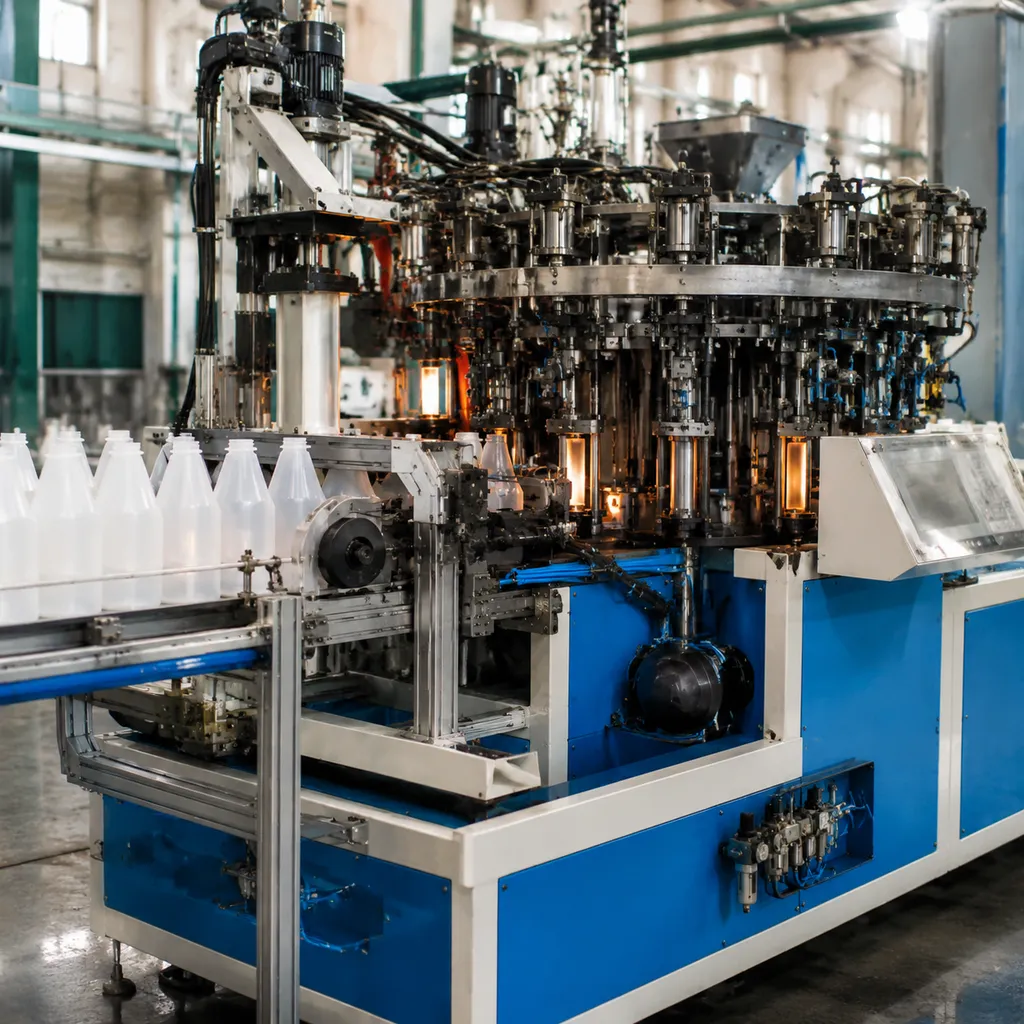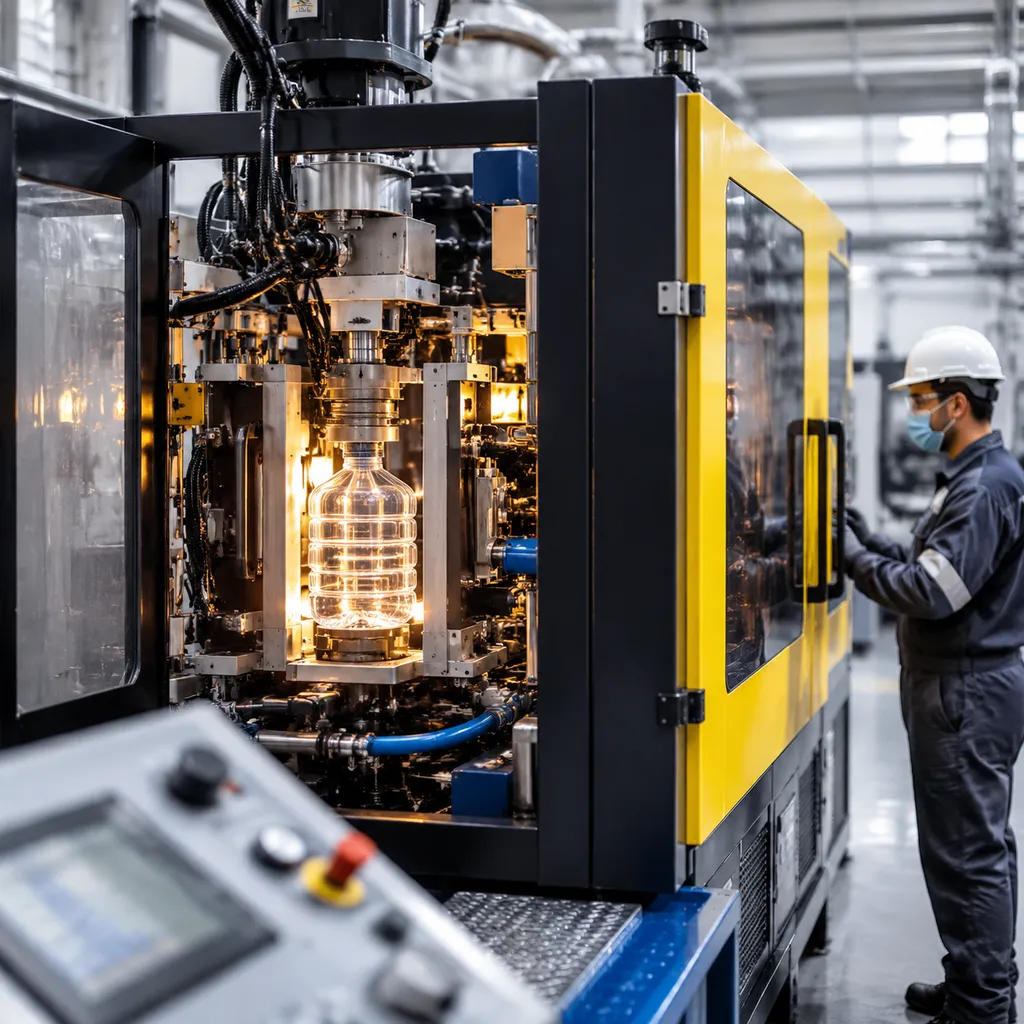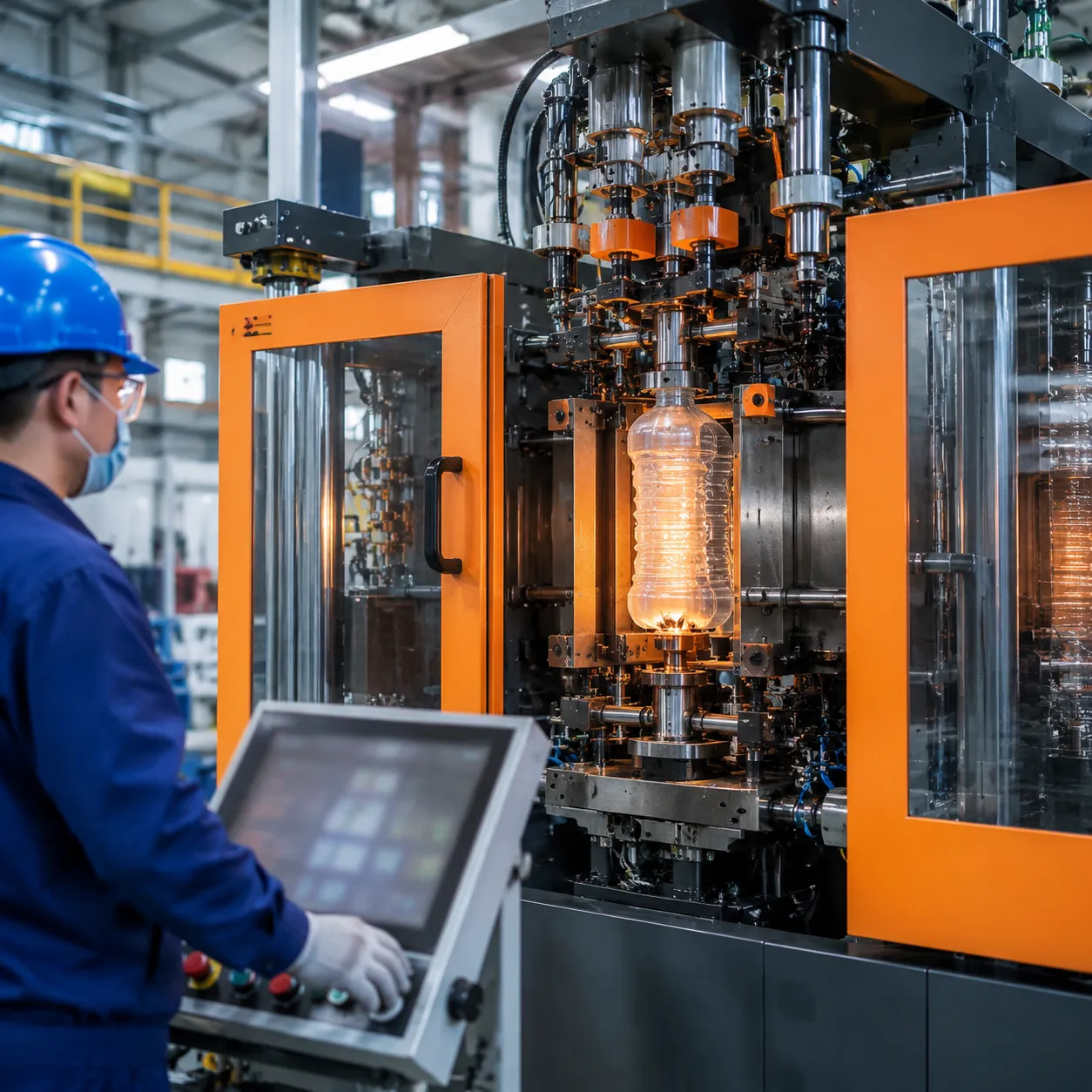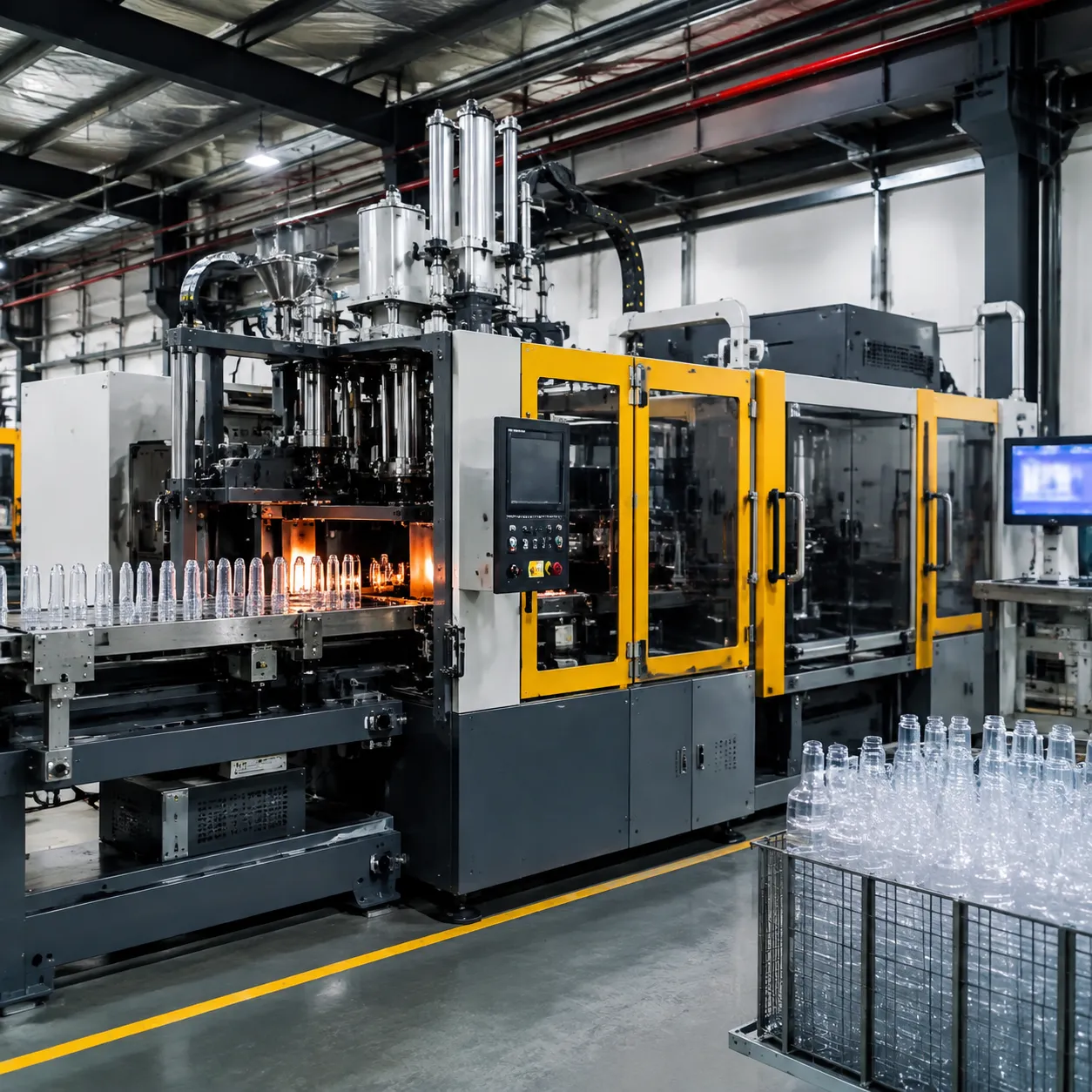

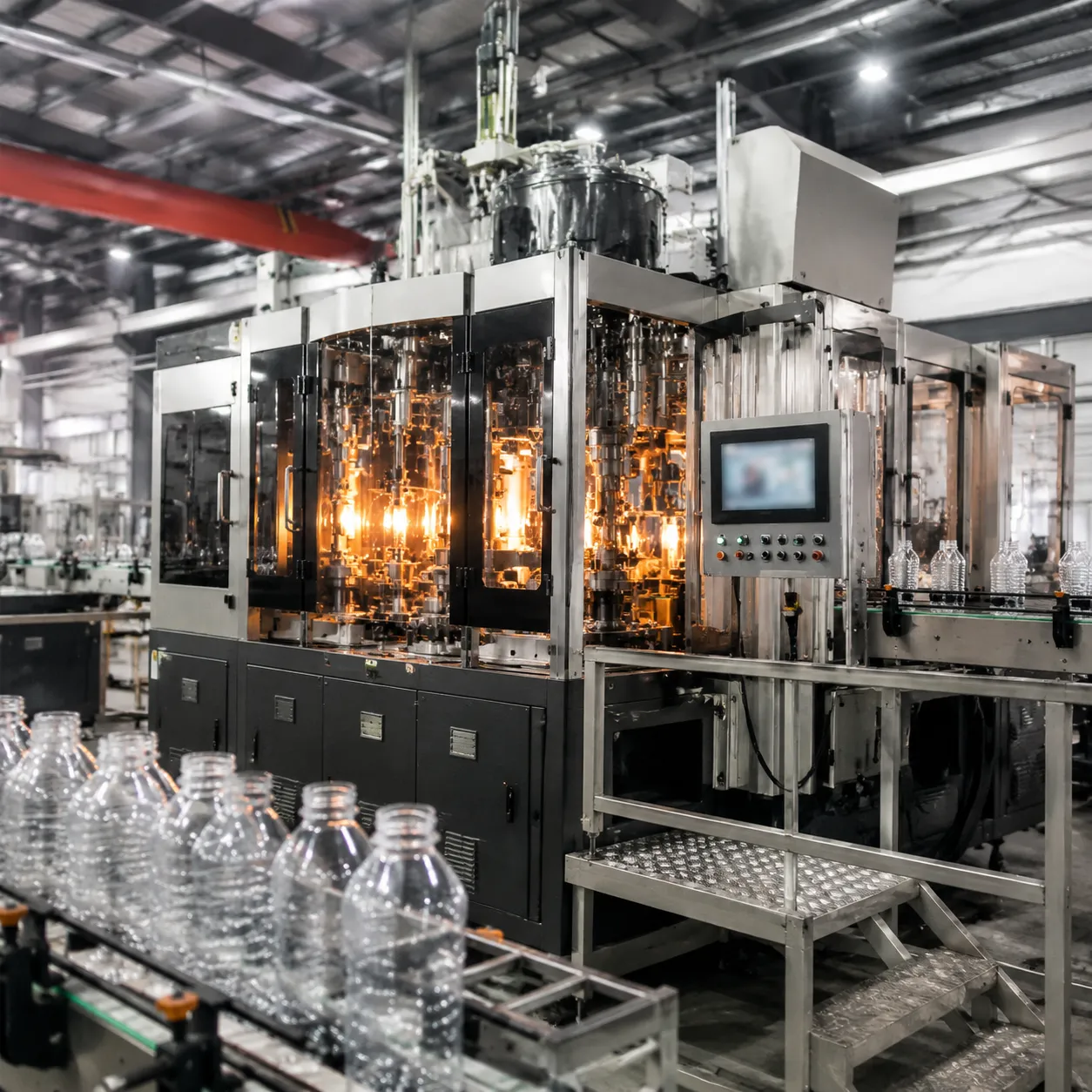
Overview
Automatic hot fill blow molding machine lines produce heat resistant bottle PET containers for fruit juice packaging, RTD tea container runs, and isotonic drink packaging at fill temperatures up to 92°C.
PET stretch blow molding with heat-set molds (120–140°C) · full automatic hot fill blow molding machine throughput with integrated auto loader feed · electric blow moulding servo clamping for repeatable cavity count cycles.
Automatic Hot Fill Blow Molding Machine — PET Stretch Blow Overview
| Feature | Standard Stretch Blow Molding | Hot Fill Stretch Blow Molding |
|---|---|---|
| Mold Temperature | Chilled water (10°C – 20°C) | Hot oil circulation (120°C – 140°C) |
| PET Molecular Structure | Low-crystallinity amorphous state | High-crystallinity heat-set structure |
| Max Filling Temperature | 60°C (140°F) | 92°C (198°F) |
| Vacuum Pressure Handling | Prone to panel collapse & distortion | High structural & vacuum resistance |
Core Definition and High-Temperature Working Mechanism
Standard PET containers soften under intense heat. A PET hot fill bottle blowing machine overrides this material limit using a precise heat-set crystallization process.
- Targeted Preform Heating: Preforms travel through a specialized heating furnace to achieve optimal thermal elasticity.
- Thermal Stress Relief: High-temperature oil-heated molds (120°C–140°C) relieve internal strain in the PET material while stretching.
- Crystalline Alignment: The heated mold wall increases the PET's molecular crystallinity, forming a rigid structure that retains its shape under extreme heat.
Why Hot Fill Packaging Demands Specialized PET Molding
Hot liquid filling subjects containers to two major structural threats: immediate thermal softening during filling, and severe atmospheric vacuum pull as the product cools. Standard cold-mold machines produce bottles that collapse under these conditions. Hot fill systems ensure high dimensional stability, uniform wall thickness, and precise neck dimensions capable of surviving harsh thermal processing.
Automatic Hot Fill Blow Molding Machine — Heat-Set Features & Specs
Each bottle blowing machine build withstands intense thermal strain without sacrificing output speed—high temperature resistance heat-set molds paired with precision preform heating zones across every cycle.
Precision Mold Heating and Heat-Set Crystallization System
Standard blow molders create bottles that warp under high heat. Hot-fill lines equip with specialized oil-heating channels that hold mold temperatures between 120°C and 140°C.
Heat-Set Crystallization Process: Locks PET polymer chains into a rigid thermal state during the blowing phase.
Zero Deformation: Ensures containers hold their shape when filled with hot liquids up to 92°C.
Localized Neck Cooling: Keeps bottle threads cool so cap fitment remains perfectly tight.
Multi-Stage Preform Infrared Heating Technology
Hot fill preforms feature thicker walls that require deep, uniform heat penetration. Our preform heating furnace uses multi-zone infrared lamp modules to heat preforms thoroughly without scorching the outer skin.
Zone-by-Zone Control: Adjusts lamp intensity along the preform body and heavy tail sections.
Forced-Air Cooling: Prevents preform neck finish distortion before entering the mold.
Reflective Oven Lining: Traps and recycles radiant heat to trim power usage.
Robotic Bottle Transfer and High-Speed Servo Clamping
Fast, stable mechanical movement keeps bottle quality high and cycle times low. Fully servo driven blow molding systems for smooth preform loading and bottle discharge.
Robotic Grippers: Move preforms and finished containers cleanly without surface scratching or scuffing.
High-Pressure Servo Clamping: Holds mold halves tightly under 30–40 bar blowing pressure, eliminating visible seam lines.
Vibration-Free Motion: Protects hot, newly formed bottles during rapid transfer steps.
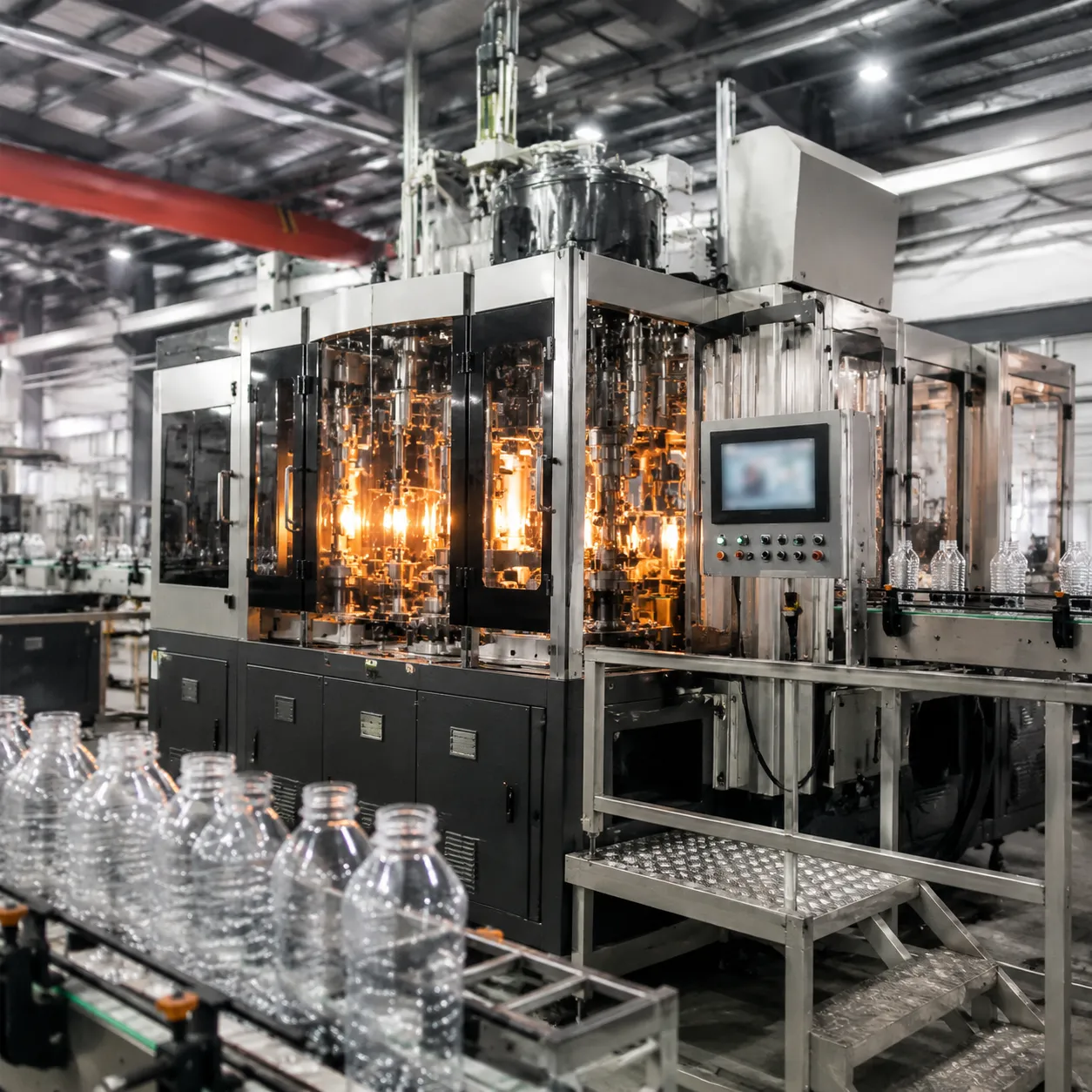
Intuitive Touch-Screen PLC Control System
Machine operation stays simple with an easy-to-use digital interface built for fast adjustments on the plant floor.
Recipe Memory: Stores pre-set heating profiles and timing for quick bottle changeovers.
Live Fault Tracking: Displays real-time temperature, air pressure, and motor data for quick troubleshooting.
Safety Controls: Automatically stops operations if mold temperatures or line pressures drop below safe limits.
| Core System | Technical Feature | Direct Operational Advantage |
|---|---|---|
| Heat-Set Mold | Circulating hot oil (120 °C–140 °C) | Stops bottle shrinkage during 92 °C hot fills |
| Infrared Oven | Multi-zone lamps with forced air | Ensures even wall thickness on heavy preforms |
| Servo Clamping | All-electric drive system | Cuts cycle times and prevents mold seam flash |
| PLC Touchscreen | Centralized profile storage | Speeds up changeovers and simplifies troubleshooting |
Operational Benefits of an Automatic Hot Fill Blow Molding Machine
High-speed beverage lines cannot afford bottle deformation, wasted power, or sudden line stoppages—each automatic hot fill blow molding machine targets these production bottlenecks.
| Bottling Line Challenge | Machine Feature | Practical Result |
|---|---|---|
| Vacuum collapse at high temp | Heat-set crystallization system | Zero bottle distortion up to 92°C |
| Labor bottlenecks & jams | Integrated auto loader feed | Uninterrupted high-speed throughput |
| Excessive electricity costs | Compact infrared heating furnace | Lower energy draw per bottle |
| Uneven walls & weak bases | Precision servo stretch controls | Reliable stacking and shipping strength |
Zero Deformation Up to 92°C
Thermal shock ruins standard PET containers during hot filling. Our heat-set technology prevents bottle shrinkage and vacuum collapse at filling temperatures up to 92°C (197°F). Your bottles stay perfectly straight and structurally sound through capping and cooling.
Maximum Output with Integrated Auto Loaders
Manual feeding slows down plastic bottle manufacturing operations and introduces unnecessary downtime. The integrated auto loader delivers a continuous stream of preforms into the molding unit, maximizing hourly bottle capacity while keeping labor costs low.
Lower Power Bills via Optimized Preform Heating
Heating is typically the biggest power drain in PET stretch blow molding. Optimized preform heating furnace targets infrared heat precisely where the plastic needs it. This shortens pitch distance, eliminates wasted ambient heat, and significantly cuts overall power consumption.
Uniform Wall Thickness and Structural Stability
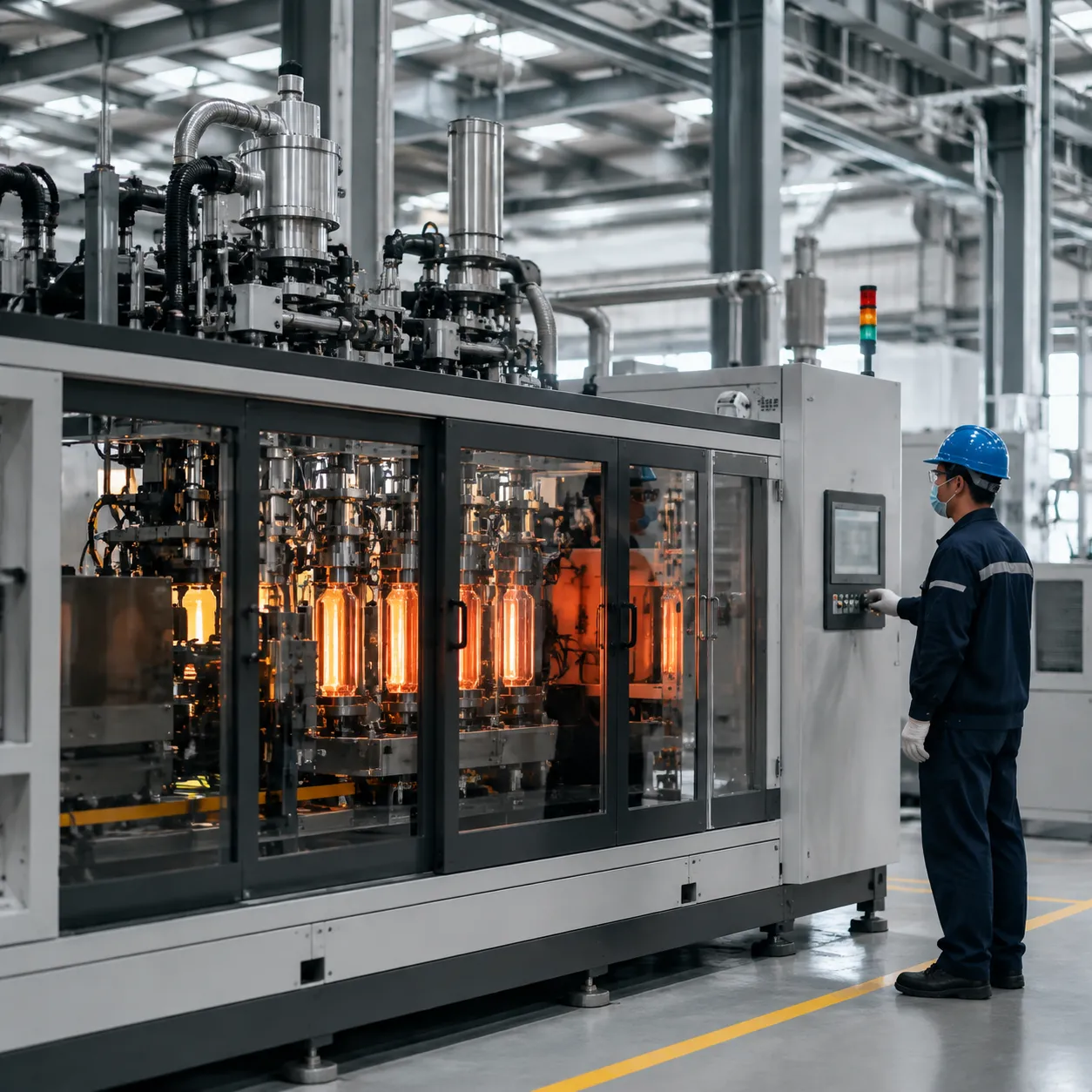
Weak spots lead to crushed bottles on the pallet. Precision electric blow moulding servo stretch controls each preform with exact speed and depth. This ensures ideal wall thickness distribution and base strength across every single cavity.
Primary Applications of Automatic Hot Fill Blow Molding Machines
Hot-fill automatic hot fill blow molding machine solutions produce rigid PET containers for demanding fruit juice packaging and RTD tea container lines—compare standard automatic linear PET blow molding machine cold-fill output when heat-set is not required.
Hot-Filled Fruit Juices, RTD Teas, and Sports Drinks
High-acid beverages demand hot filling temperatures between 185°F and 195°F (85°C–92°C) to ensure product sterility without artificial preservatives. Each heat resistant PET bottle molder units to handle these intense thermal demands seamlessly:
100% Pure Fruit Juices: Maintains crystal-clear clarity while eliminating bottle deformation from thermal shock.
Ready-to-Drink (RTD) Teas: Prevents sidewall vacuum collapse during post-fill cooling and shower cycles.
Isotonic Drink Packaging: Supports custom base geometries and structural ribs for high-speed filling lines.
High-Viscosity Sauces, Condiments, and Edible Oils
Dense food products are routinely dosed hot to improve product flow and extend shelf life. Our stretch blow molding equipment creates heavy-duty PET bottles that withstand thick liquid fills without side panel warping:
Ketchup and BBQ Sauces: Secures precise neck finish specs to maintain airtight capper sealing.
Hot-Poured Syrups and Marinades: Eliminates package ovality caused by liquid weight and heat retention.
Specialty Edible Oils: Guarantees uniform wall thickness distribution for superior warehouse stacking strength.
Pasteurized Dairy Products and Liquid Nutritional Supplements
Sensitive nutrition products demand strict microbial control through hot fill processing. Each PET hot fill bottle blowing machine systems to meet rigorous sanitation and thermal stability standards:
Pasteurized Milk and Dairy Alternatives: Delivers heat-set PET containers that survive thermal pasteurization cycles.
Nutritional Meal Replacements: Protects product integrity and barrier performance over extended shelf lives.
Wellness Shots and Concentrates: Produces durable, small-format bottles with precise rim seating for foil seals.
How to Select the Right Automatic Hot Fill Blow Molding Machine
Matching Neck Finish Specs and Preform Designs
Choosing the right automatic hot fill blow molding machine starts with your bottle specs. Hot fill applications put extreme thermal stress on the bottle neck, which warps if your preform and tooling aren't properly matched.
- Neck Finish Types: Determine whether your product line requires pre-crystallized necks (for maximum high-temp resistance) or thick-walled amorphous necks (suitable for moderate temperatures up to 85°C).
- Thread & Sealing Precision: Ensure transfer mechanisms handle exact neck diameter specs—28 mm, 38 mm, or wide-mouth finishes—without scoring or deforming the sealing surface.
- Preform Weight Distribution: Match preform gram weight and wall thickness to target bottle volume. Proper material distribution ensures structural stability during heat-set crystallization.
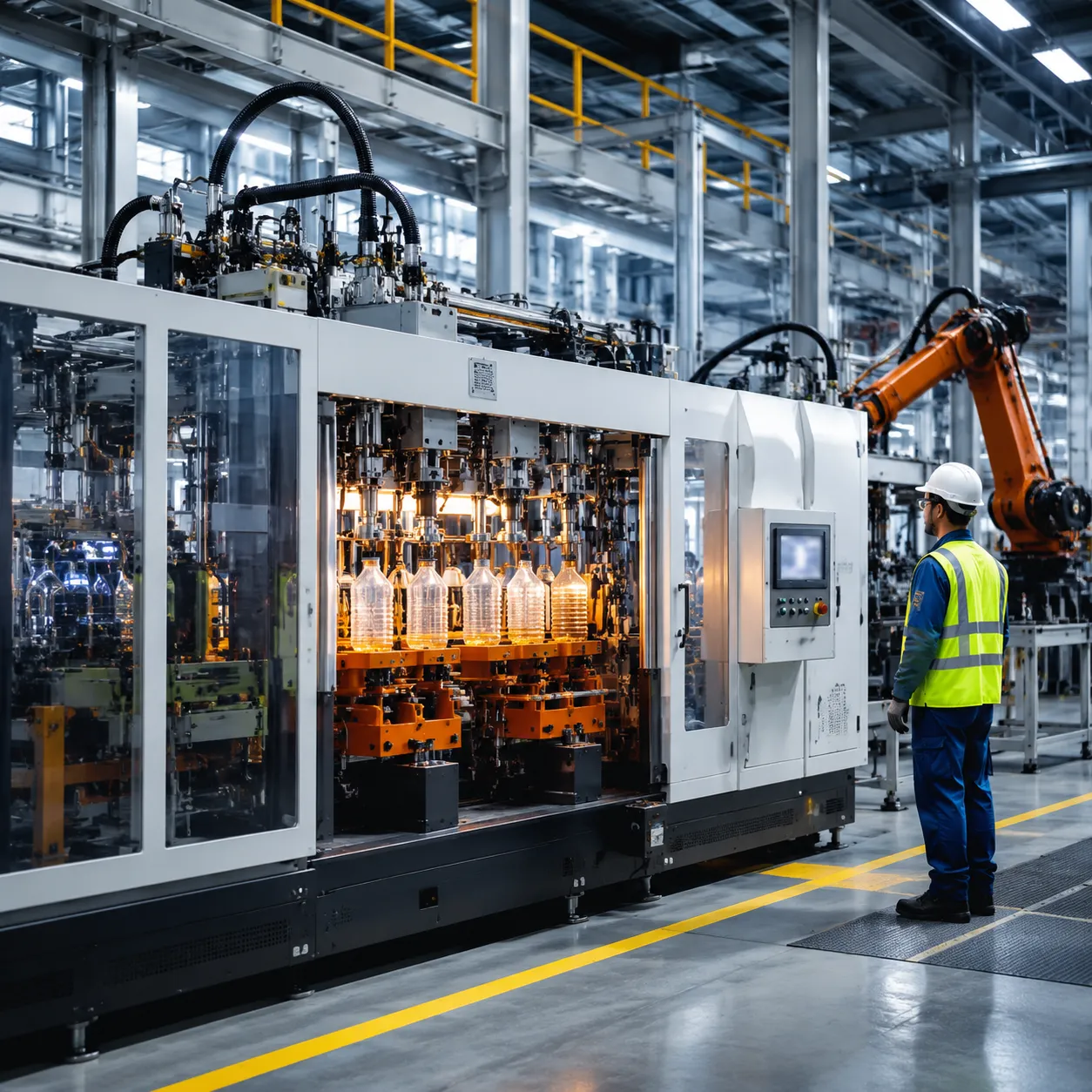
Evaluating Production Capacity Needs (Bottles Per Hour)
Your blowing unit must seamlessly match your downstream filling line speed to eliminate production bottlenecks.
- Target Output (BPH): Calculate required bottle capacity in bottles per hour based on daily filling schedules, accounting for longer heat-set cycle times.
- Cavity Count & Machine Type: Decide between a linear bottle blowing machine for flexible output (2,000 to 8,000 BPH) or a high-speed rotary system—see cheap price automatic PET stretch blow molding machine tiers for adjacent standard-stretch SKUs.
- Line Balance: Account for heating dwell times. Because heat-resistant PET bottle manufacturing needs precise mold contact time, output per cavity differs from cold-fill setups.
Assessing Power Consumption and High-Pressure Air Recovery
Hot fill bottle blowing uses extra energy to keep molds at elevated temperatures. Reducing utility overhead directly boosts your unit margins.
- Air Recovery Systems: Look for integrated air recycling systems. Integrated machinery with high-pressure air recovery systems that redirect exhaust air into low-pressure pneumatic systems, saving up to 35% on compressor power.
- Infrared Oven Efficiency: Choose preform heating furnaces with optimized lamp spacing and targeted cooling channels to minimize wasted kilowatt-hours.
- Servo Drive Technology: Electric, servo-driven blow molding eliminates hydraulic energy loss, cuts cleanroom contamination risk, and maintains repeatable mechanical cycles.
Checking Mold Flexibility and Quick-Change Capabilities
Multi-SKU packaging lines benefit from quick tool changes—lower-volume trials can start on our factory price semi automatic PET blow molding machine before scaling to full automatic hot fill.
- Tool-Less Fast Swaps: Select systems built with quick-locking mold bases, allowing your operators to change cavity sets in under an hour.
- Recipe Storage in PLC: Use intuitive touch-screen controls with stored heating profiles and timing setups for each specific bottle SKU.
- Base & Panel Adaptability: Ensure the mold platen design handles various structural container shapes, including vacuum panel designs and panel-less ribbed bottles.
Share neck diameter, target bottle capacity (BPH), and bottle volume range for configured hot-fill quotes—contact BlowPacker for mold trials, preform IV specs, and line-layout scope.
Maintenance Practices and Common Troubleshooting
Keeping an automatic hot fill blow molding machine running at peak performance requires disciplined maintenance and fast troubleshooting. Because heat-set PET bottle molding relies on tight thermal tolerances, even minor temperature variations can compromise bottle structure.
Daily Mold Temperature and Heater Calibration
Starting every shift with a quick calibration routine to lock in bottle quality:
- Check Thermal Oil Units: Verify oil heaters maintain precise mold temperatures across all cavities to ensure proper thermal setting.
- Calibrate Preform Heating Furnace: Clean infrared lamp reflectors and check pyrometers to ensure actual preform surface temps match your PLC setpoints.
- Inspect Fluid Lines: Look for thermal oil or cooling water leaks that cause cold spots and disrupt the heat-set crystallization process.
Fixing Bottle Defects: Wall Thickness, Haze, and Base Deformation
When defect issues pop up on the production floor, use these quick adjustments:
- Uneven Wall Thickness: Rebalance your preform heating zone distribution. If one side of the bottle is too thin, lower the heat on that specific zone or check for misaligned stretch rods.
- Hazy PET Bottles: Clear haze means incorrect preform heating. If the bottle looks milky-white, the preform is overheating (thermal crystallization)—reduce lamp power. If it looks chalky or streaky, it is too cold (stress whitening)—increase heat.
- Base Deformation: If the bottle base pops out or collapses during filling, ensure base cooling circuits are clear and extend high-pressure blow dwell time slightly to set the plastic.
Servicing Stretch Rods, Pneumatic Valves, and Seal Nozzles
Wear and tear on mechanical parts directly impacts bottle consistency and machine uptime:
- Stretch Rods: Inspect for straightness, tip wear, and smooth linear motion daily. Misaligned rods cause off-center base points and thin walls.
- Pneumatic Valves: Clean high-pressure blow valves and check reaction times. Sluggish valve response ruins blow timing and air recovery efficiency.
- Seal Nozzles: Inspect sealing gaskets and O-rings for wear. Air leakage at the bottle neck prevents full pressure build-up, resulting in poorly formed heat resistant PET bottles.
Frequently Asked Questions: Automatic Hot Fill Blow Molding Machine
What is the maximum temperature a hot fill PET bottle can withstand?
Standard PET distorts around 60°C to 65°C (140°F–149°F). Using an automatic hot fill blow molding machine with built-in heat-set crystallization, the resulting heat resistant PET bottle safely handles hot fill temperatures between 85°C and 92°C (185°F–197°F) without bottle shrinkage or structural warp.
How does heat-setting prevent bottle deformation during filling?
The heat-setting process uses heated mold walls (typically 120°C–140°C) during stretch blow molding. This relieves internal stresses in the PET material and triggers thermal crystallization. The hardened crystalline structure allows the container to handle hot liquid insertion and resist vacuum collapse as the product cools.
Can I run standard cold-fill preforms on a hot fill blow molder?
No. Hot fill bottle blowing requires preforms made with higher intrinsic viscosity (IV) resin and tailored neck finishes. Standard cold-fill preforms lack the neck wall thickness or crystallized neck structure needed to resist softening, causing seal failures and neck ovalization at high filling temperatures.
What is the difference between linear and rotary hot fill blow molding machines?
| Feature | Linear Automatic Hot Fill Blow Molder | Rotary Stretch Blow Molding Machine |
|---|---|---|
| Output Capacity | 1,500 to 8,000 bottles per hour (BPH) | 10,000 to 30,000+ bottles per hour (BPH) |
| Footprint & Setup | Compact footprint, lower capital investment | Larger footprint, designed for full inline integration |
| Mold Changeovers | Quick, flexible mold swaps for short runs | Optimized for high-speed continuous production |
| Best Application | Specialty craft juices, sauces, regional RTD teas | High-volume beverage bottle manufacturing plants |
Ready to scope plastic bottle manufacturing output for hot-fill lines? Contact BlowPacker with preform drawings and BPH targets.