
Overview
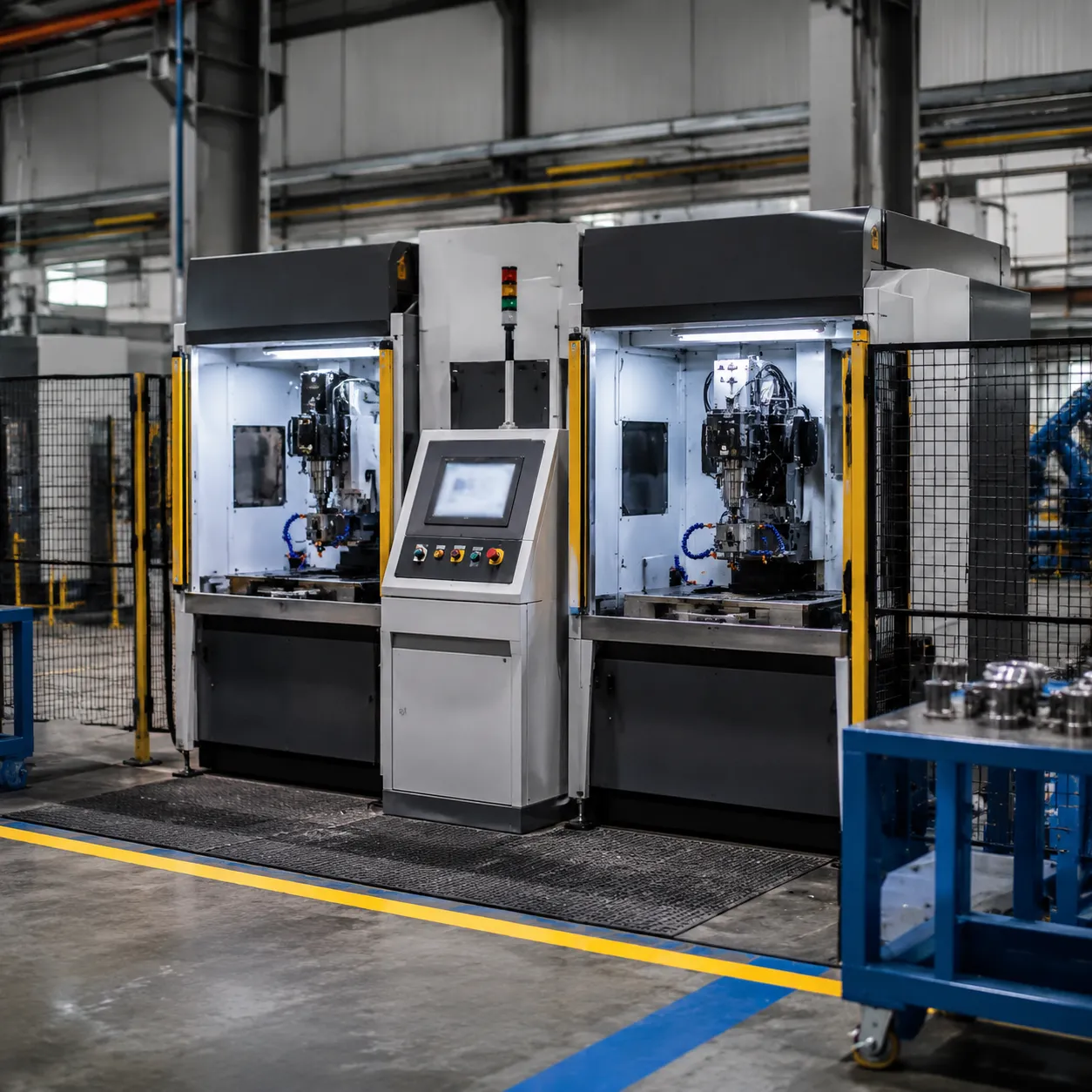
Procurement teams comparing double station automatic extrusion blow molding machine price quotes from double station automatic extrusion blow molding machine suppliers need aligned specs before FOB review. Twin-station EBM lines target jerry can production, HDPE container packaging, and high-volume plastic bottle blowing from 100 ml to 30 L.
| Quick spec | Typical range |
|---|---|
| Price band (USD) | $45,000–$350,000+ by cavity & layers |
| clamping force | 30 kN–500+ kN |
| output capacity kg/hr | 40–350+ kg/hr HDPE melt |
| screw diameter | 45–120 mm barrier screws |
Key Price Determinants: What Drives Double Station EBM Machine Pricing?
Compare line-level quotes with our automatic extrusion blow molding machine factory tier when scaling from single-station to twin-station plastic extrusion machinery.
When evaluating a double station automatic extrusion blow molding machine price, plant managers and procurement engineers often ask us why upfront quotes vary significantly between equipment configurations. The total capital investment is driven directly by core mechanical engineering, automation integration, and plasticizing performance tailored to your operational throughput requirements.
Extruder Screw Diameter and Plasticizing Capacity
The heart of any twin station extrusion blow molder is its plasticizing unit. Selecting the correct extruder screw diameter directly impacts melt homogeneity and maximum output capacity kg/hr.
- Standard Screw Sizes (55mm to 100mm): Ideal for standard single-layer HDPE container manufacturing.
- High-L/D Ratio Screws: Premium barrier-resin processing screws increase thermal stability and processing rates, raising baseline machinery costs while drastically lowering per-unit production cycles.
- Throughput Impact: Higher kg/hr melt capabilities require larger gearboxes and heavy-duty drive motors, directly scaling machine investment with hourly yield targets.
Die Head and Multi-Cavity Co-Extrusion Configurations
Your targeted container design defines the required die head specification for co-extrusion technology. As custom tooling complexity scales from single-cavity up to 6-cavity double-station setups, die head engineering becomes a major cost driver.
| Configuration | Typical Cavity Setup | Target Production / Material | Cost Impact Level |
|---|---|---|---|
| Monolayer Standard | Dual Station 2-Cavity | Standard Household & Chemical Bottles | Baseline |
| Multi-Cavity High Speed | Dual Station 4 to 6-Cavity | High-Volume Dairy & Personal Care Containers | Moderate to High |
| Co-Extrusion (2 to 6 Layers) | Multi-Layer Die Head | EVOH Barrier Packaging & Agrochemical Drums | Premium |
Drive Architecture: All-Servo vs. Hydraulic Costs
Choosing between an electro-mechanical drive system and a standard hydraulic drive system significantly affects both initial purchasing capital and long-term operating expenditures.
- All-Servo Electric Systems: Higher upfront machinery cost, but delivers up to 30%–50% energy consumption savings, precise motion control, zero oil contamination, and reduced maintenance downtime.
- Standard Hydraulic Systems: Lower initial CAPEX, ideal for rugged, ultra-high clamping force requirements, but higher ongoing energy expenses.
- Hybrid Systems: Combines hydraulic high-tonnage clamping force with servo-driven extrusion and carriage shuttling to optimize operating cost profile.
Precision 100-Point Electronic Parison Wall Thickness Control
Raw material accounts for up to 70% of long-term container production costs. Integrating automatic parison wall thickness control adds to the upfront machine price but yields material savings.
- Dynamic Material Allocation: Precision 100-point servo-actuated parison control prevents resin pooling in non-critical bottle zones.
- Weight Reduction: Shaves 10% to 15% off total bottle weight while maintaining structural rigidities and drop-test specifications.
- Material savings timeline: Material savings typically amortize the parison controller upgrade cost within 6 to 12 months of continuous operation.
Mold Tooling, CNC Engineering, and Conformal Cooling Channels
The structural mold tooling integrated into our double station hollow container equipment dictates final cycle times and product yield.
- Precision CNC Tooling: High-grade aircraft aluminum and beryllium-copper pinch-offs increase mold durability and thermal conductivity.
- Conformal Cooling Channels: Custom-contoured cooling fluid lines built into the mold reduce cooling cycle times by up to 20%, dramatically boosting daily production capacity.
Double Station EBM Technical Specifications Matrix
For 1000L+ accumulator-head programs, review 1000L automatic extrusion blow molding machine price benchmarks before sizing double-station plastic drum manufacturing cells.
When evaluating a double station automatic extrusion blow molding machine price, matching machine specs to your exact packaging requirements prevents over-specifying hardware and burning unnecessary capital. These twin station extrusion blow molder platforms machinery to balance cycle times, melt quality, and kilowatt draw so you get maximum throughput per dollar invested.
Performance & Configuration Benchmarks
| Specification Parameter | Technical Range | Production & material savings Impact |
|---|---|---|
| Container Volume Range | 100ml to 30L | Handles everything from small bottles up to large industrial drums |
| clamping force | 30 kN – 500+ kN | Rigid toggle frames prevent mold deflection and trim rework |
| screw diameter | 45 mm – 120 mm | Optimized barrier screw geometry for rapid plasticizing capacity |
| output capacity kg/hr | 40 kg/hr – 350+ kg/hr | Maintains fast cycle times across single and multi-cavity setups |
| energy consumption | Up to 30% power savings | Integrated servo drives directly lower utility costs per bottle |
Precision Engineering & Component Integration
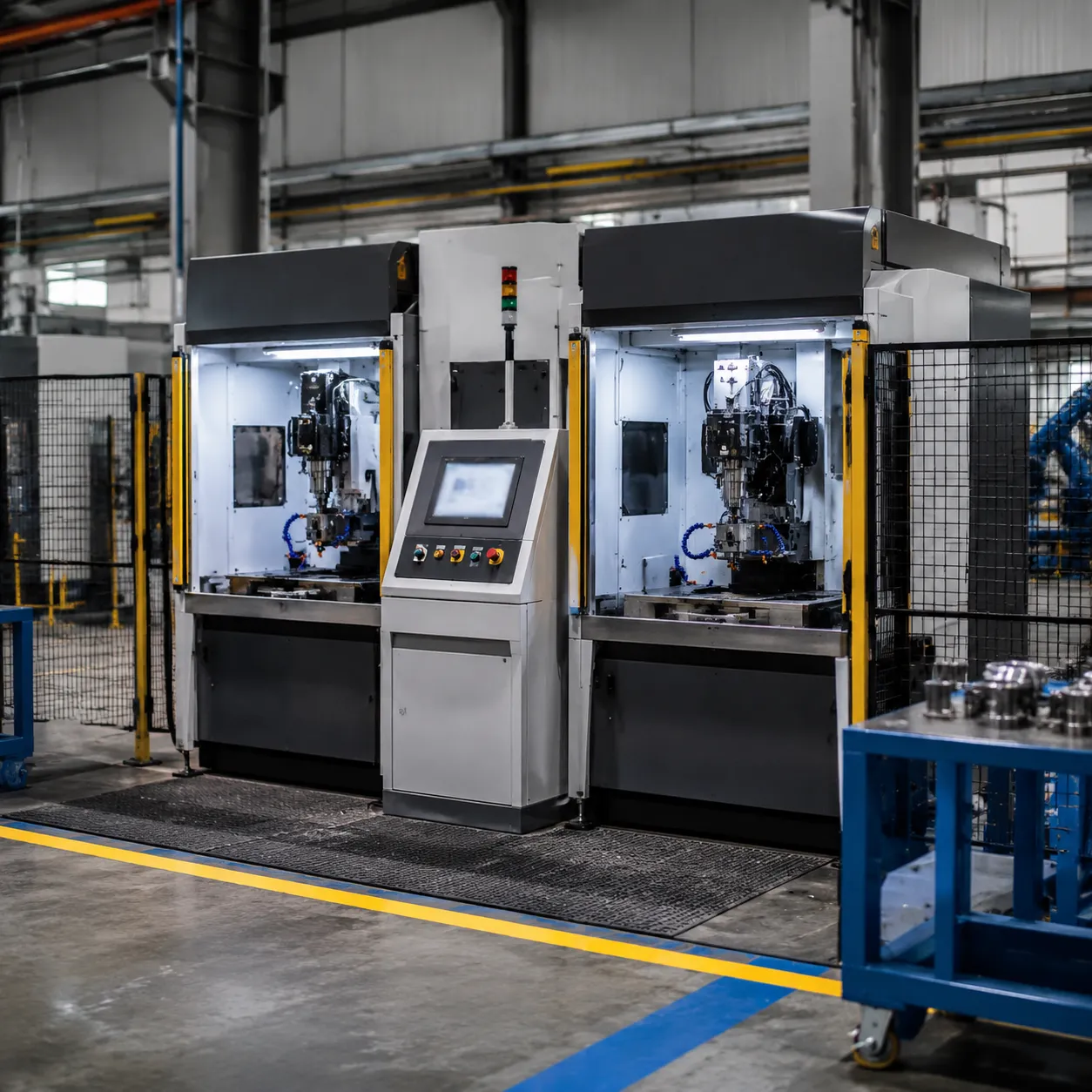
- Container Volume Versatility: Built for high-volume HDPE container manufacturing machine setups, effortlessly running 100ml healthcare vials up to multi-layer 30L jerry can production.
- Clamping Tonnage (30 kN – 500+ kN): Heavy-duty tie-bar structures and balanced toggle engineering keep mold faces parallel, extending tool life and securing clean, flash-free seal lines.
- Tier-1 Component Standard: Tier-1 builds use off-the-shelf, globally supported industrial controls—Siemens/Beckhoff PLCs, Festo/SMC pneumatics, and Rexroth hydraulics—eliminating proprietary hardware lock-in and minimizing spare parts downtime in regional plants.
- High-Output Plasticizing & Efficiency: Precision-machined screw profiles deliver thermal stability and high output capacity kg/hr metrics while trimming energy consumption by up to 30% compared to traditional hydraulic systems.
Core Machine Features & Structural Architecture
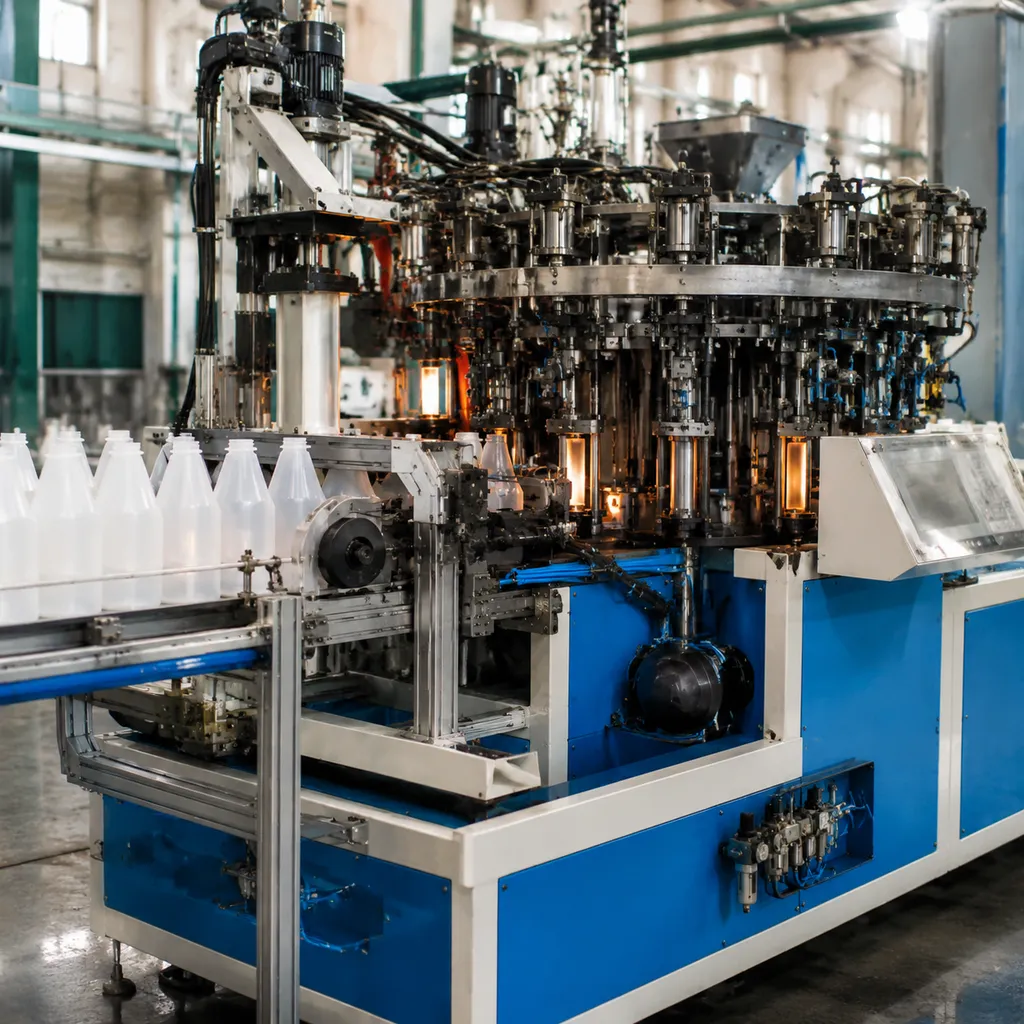
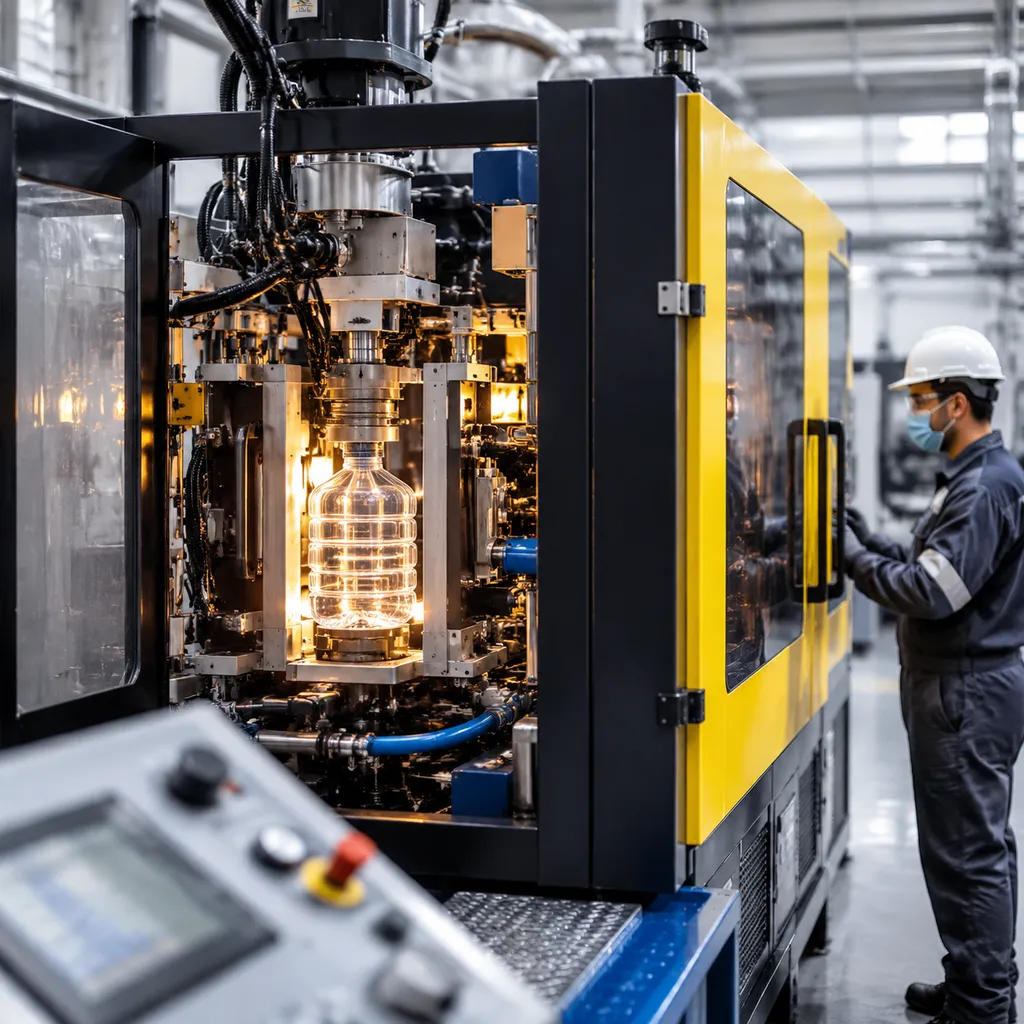
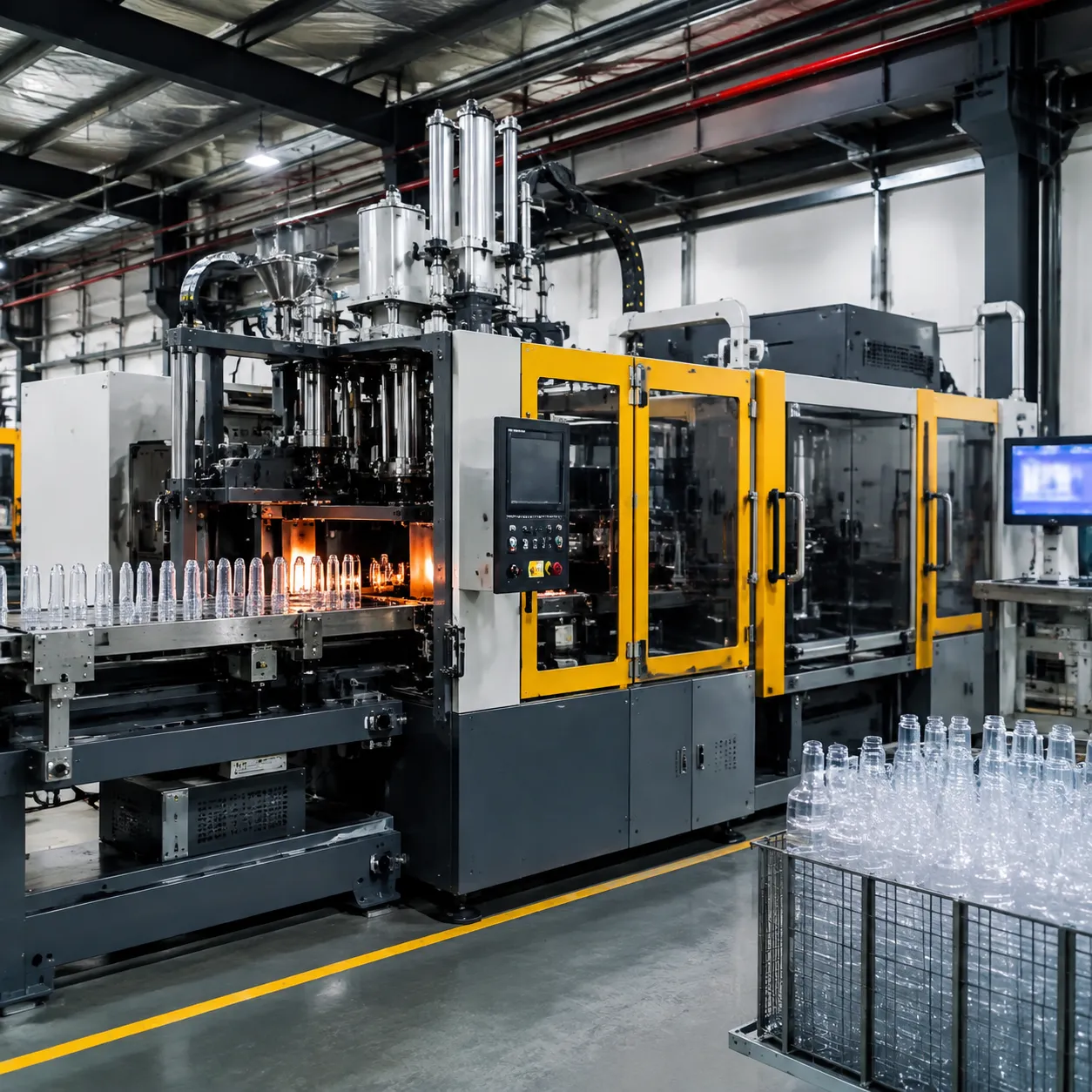
Double-station automatic extrusion blow molding machine platforms around heavy-duty mechanical frameworks and top-tier industrial automation. By pairing high-speed shuttle movements with integrated downstream processing, we eliminate labor bottlenecks and maximize hourly throughput.
Tier-1 Automation & Motion Control
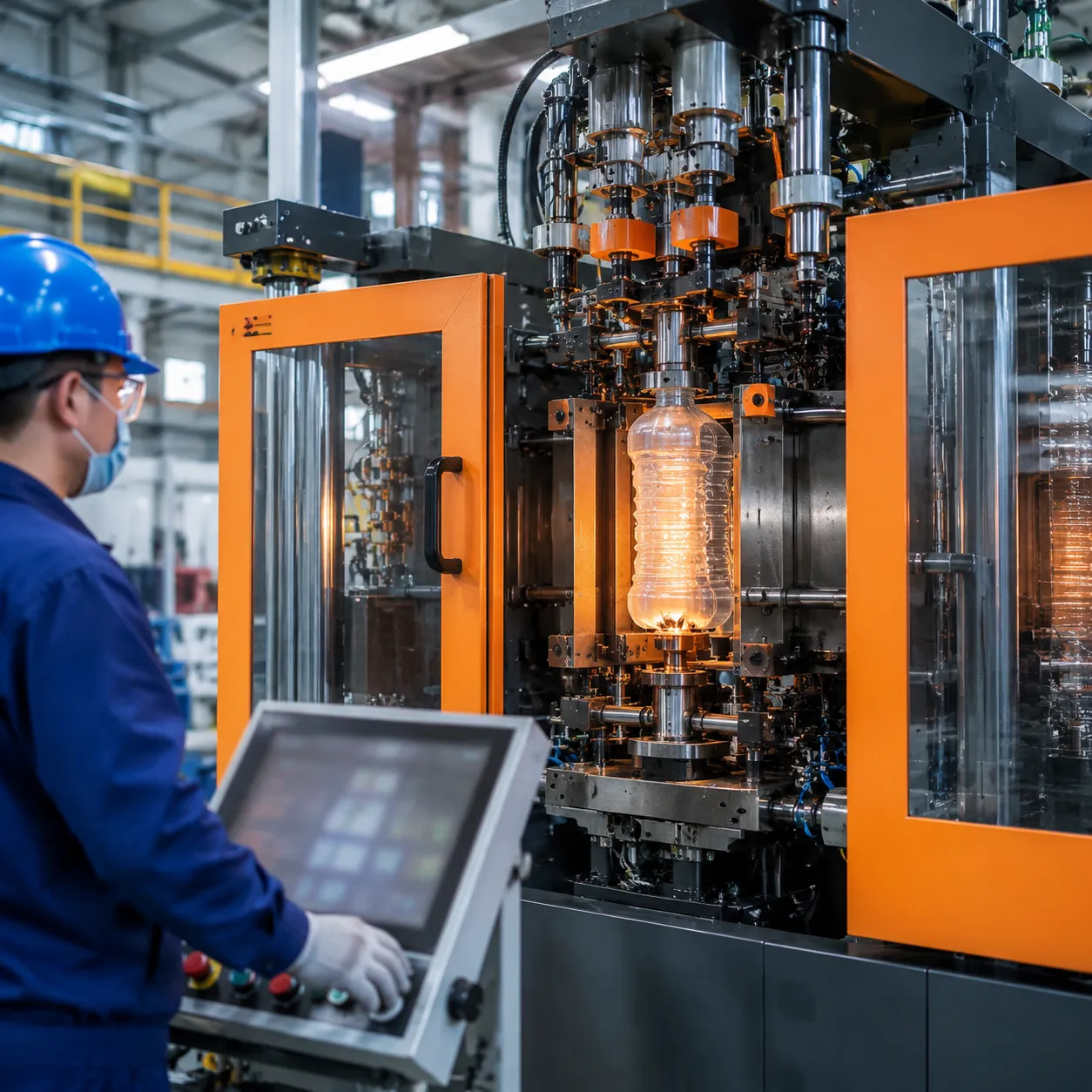
Fully automatic operation relies on Siemens S7-1500 and Beckhoff EtherCAT control architectures. Real-time bus communications sync shuttle carriage movement with die head parison extrusion to maintain sub-millimeter cycle repeatability.
- Precision Motion Control: Closed-loop servo control prevents carriage overshoot and extends mechanical shock-absorber life.
- Recipe Storage: Touchscreen HMI stores up to 500 mold profiles for fast product changeovers.
- System Diagnostics: Real-time I/O monitoring flags pressure drops or thermal deviations immediately.
Auto-Deflashing & In-Line Scrap Recycling
Integrated auto-deflashing modules include synchronized trimming hardware customized to your specific mold geometry.
- Clean Trim Removal: High-force pneumatic punch stations cleanly shear flash from bottle necks, bottoms, and handle cutouts.
- Closed-Loop Scrap Processing: Trimmed material falls directly into under-machine collection chutes for immediate regrind processing.
- Multi-Cavity Reliability: Uniform trimming pressure across up to 6-cavity configurations.
Integrated Leak Testing & Downstream Transport
To deliver a true turnkey blow molding production line, inline testing integrates and bottle handling right at the discharge zone.
| System Feature | Technical Specification | Operational Impact |
|---|---|---|
| Inline Leak Tester | High-sensitivity pressure decay (detects 0.1 mm defects) | Prevents defective containers from reaching filling lines |
| Servo Transport Conveyors | Variable speed modular belt with adjustable rails | Scratch-free handling for high speed plastic bottle extrusion molder setups |
| Pneumatic Rejection Station | Direct-stroke air pusher with defect counter | Isolates failed double station hollow container equipment output without slowing line speed |
Double Station EBM Applications — Jerry Cans, Drums & Plastic Bottle Blowing
How you deploy your equipment directly dictates line throughput and your overall production ramp timeline. We design our double station systems to handle diverse resins and demanding standards, ensuring that your double station automatic extrusion blow molding machine price delivers predictable throughput across high-volume production runs.
HDPE-focused plants often pair twin-station cells with automatic HDPE blow molding machine lines for mixed bottle and jerry can production schedules.
Chemical and Automotive Packaging
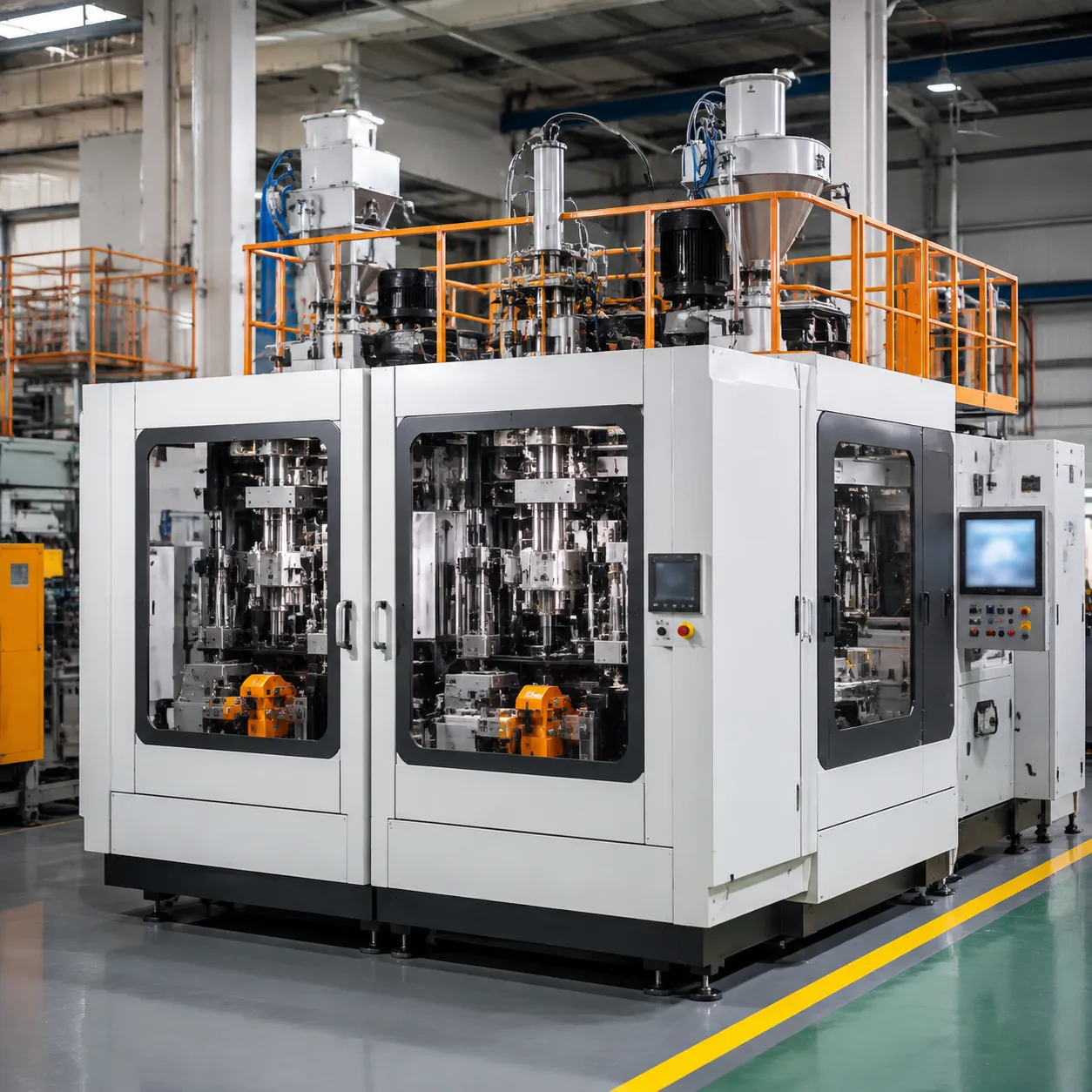
Heavy-duty chemical packaging demands high-impact seam strength, barrier properties, and strict wall thickness control. We configure lines specifically engineered for aggressive fluids and rough handling:
- Core Products: Jerry can production (5L to 30L), motor oil containers, and agrochemical drums.
- Material Setup: Multi-layer HDPE container and plastic drum manufacturing processing utilizing advanced co-extrusion technology for volatile chemical containment.
- Performance: Electronic parison control eliminates thin corners, ensuring every unit passes packaging drop-test standards without wasting raw material.
Food, Beverage, and Household Goods
For high-volume consumer goods, reducing unit costs relies entirely on continuous output and rapid cycle times. Our twin-station design maximizes floor space efficiency:
- Core Products: Edible oil jugs, fresh milk bottles, and detergent containers.
- High-Speed Output: Functions as a high speed plastic bottle extrusion molder using multi-cavity die heads to double single-station productivity.
- Automation: Automated in-line deflashing strips excess flash instantly, sending clean, ready-to-fill containers directly to downstream conveyors.
Medical and Pharmaceutical Manufacturing
Healthcare packaging requires extreme repeatability, precise volumetric tolerances, and strict cleanroom compatibility:
- Core Products: Saline bottles, liquid diagnostic packaging, and precision pharmaceutical flasks.
- Contamination Control: All-servo clamp and carriage motions eliminate hydraulic fluid mists, maintaining zero-contamination standards.
- Accuracy: Continuous parison monitoring guarantees uniform wall profiles and strict neck-finish tolerances.
Lead Times, FAT & Global Service for Double Station EBM Lines
When evaluating your overall double station automatic extrusion blow molding machine price, long-term operational uptime and build reliability dictate your predictable uptime. As a direct plastic extrusion machinery supplier, programs streamline machine delivery, deployment, and ongoing technical support so your plant hits targeted cycle times from day one.
2 to 6 Month Manufacturing Lead Time
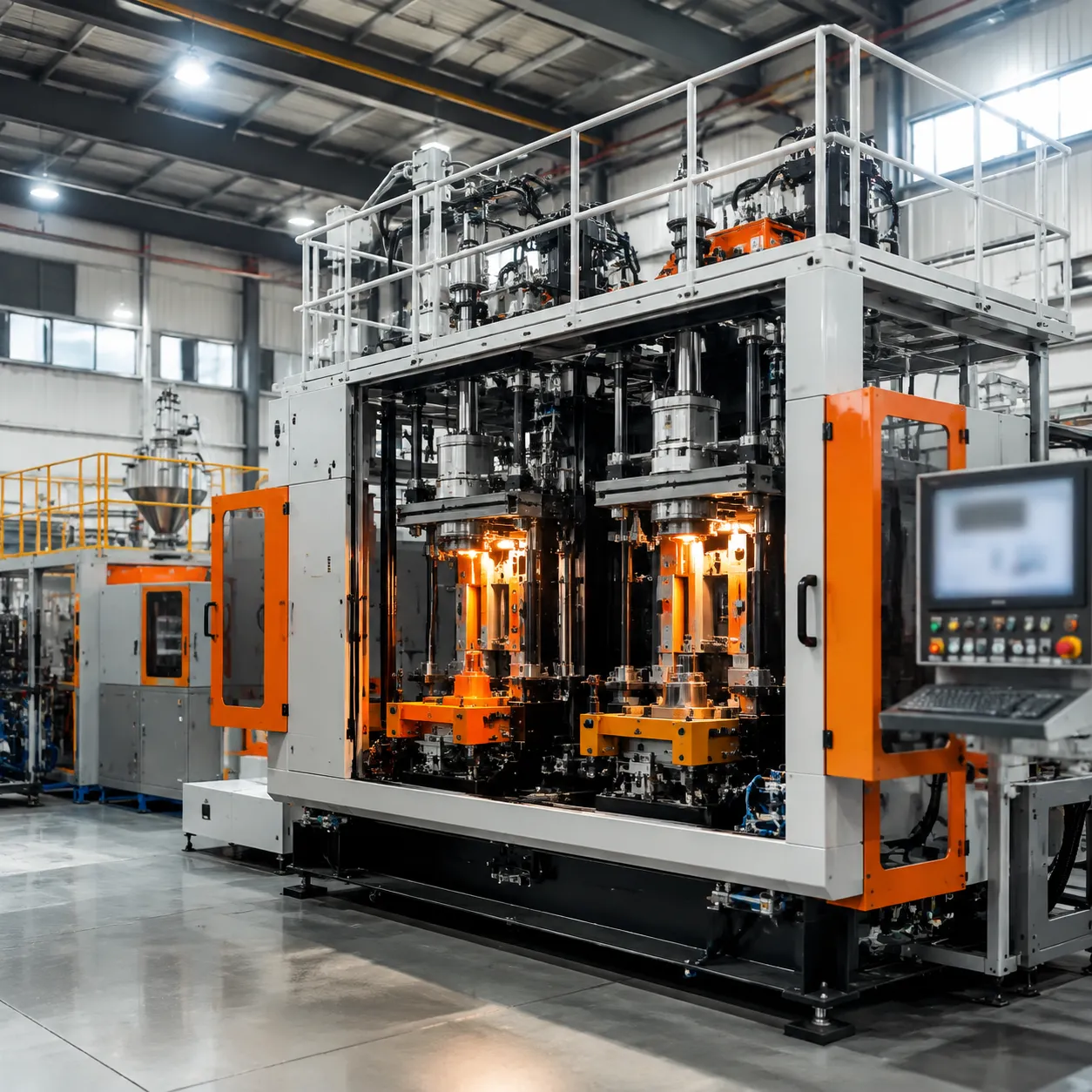
Custom engineering requires strict production milestones on a predictable build framework:
- Standard Machinery Builds: 8 to 12 weeks for standard single or double-cavity configurations.
- Complex Multi-Cavity Co-Extrusion: 16 to 24 weeks for advanced multi-layer die heads, custom mold tooling, and integrated downstream robotics.
100% Factory Acceptance Testing (FAT)
Every twin station extrusion blow molder undergoes pre-shipment FAT:
- Full Resin Dry & Wet Runs: Continuous cycle testing using your targeted resin formulations to verify plasticizing output and melt stability.
- Precision Inspection: Automated validation of the 100-point parison control, clamping force toggles, and integrated leak testers.
- Client Sign-Off: Comprehensive FAT video audit or in-person protocol execution prior to dispatch clearance.
On-Site Commissioning and Operator Training
Turnkey turnkey blow molding production line deployment includes:
- Field Installation: Our field service engineers manage mechanical alignment, pneumatic/hydraulic hookups, and electrical integration.
- Customized Staff Training: On-site training for your plant operators and maintenance engineers covering mold mounting, rapid recipe changeovers, and troubleshooting.
Cloud-Connected Remote Diagnostics
Every continuous extrusion blow molding line includes Industry 4.0 monitoring:
- Real-Time Data Analytics: Remote monitoring of PLC drive logic, temperature profile stability, and servo energy consumption.
- Immediate System Troubleshooting: Secure remote access enables our technical team to assist with parameter optimization and software updates instantly, minimizing costly field visits.
Request a Quote
Share bottle volume, cavity count, die head specification, and drive preference for an itemized
double station automatic extrusion blow molding machine price with mold
mold dimensions, parison control, and downstream options.
Contact BlowPacker with resin type, target
output capacity kg/hr, and whether you need co-extrusion technology or standard
monolayer fully automatic operation.
Frequently Asked Questions About Double Station EBM Machine Pricing
When clients evaluate the double station automatic extrusion blow molding machine price, we break down the cost components to show exact material savings, energy impact, and production efficiency. Here are answers to the top financial and technical questions plant managers ask us.
Average Price Ranges for Double Station EBM Machinery
A standard double station automatic extrusion blow molding machine price ranges from $45,000 to $350,000+, depending on bottle size, layer complexity, and automation levels.
| Machine Class | Volume Capacity | Key Features | Average Price Range (USD) |
|---|---|---|---|
| Entry/Mid-Level | 100ml – 5L | Hydraulic or hybrid drive, single to 4-cavity | $45,000 – $90,000 |
| High-Speed Industrial | 5L – 10L | Servo-driven, auto-deflashing, 100-point parison | $90,000 – $180,000 |
| Heavy-Duty/Multi-Layer | 10L – 30L | 3-to-6 layer co-extrusion, all-servo, full automation | $180,000 – $350,000+ |
All-Servo vs. Hydraulic Energy Savings
Upgrading to an all-servo driven blow molding machine reduces operational electricity consumption by 25% to 40% compared to traditional hydraulic systems.
- Zero Idle Power: Servo motors draw energy only during active movement, unlike continuous hydraulic pump operation during cooling cycles.
- Lower Operating Costs: For a typical facilities running 24/7, energy savings average $12,000 to $28,000 annually per line.
- Energy savings timeline: The upfront premium for all-servo drives usually pays for itself within 12 to 18 months.
Co-Extrusion Die Head Cost Drivers
The co-extrusion die head specification directly influences total equipment investment. Key pricing drivers include:
- Layer Count: Moving from a single-layer die head to a 3-layer or 6-layer EVOH barrier head increases head manufacturing complexity and costs.
- Cavity Configuration: Escalating from 2-cavity to 6-cavity heads demands high-precision CNC machining and custom runner balancing.
- Parison Control Integration: Incorporating real-time 100-point parison control (automatic parison wall thickness) adds precision servo-actuators and electronic controls.
Container Volume Impact on Clamping Force and Price
Container dimensions dictate the physical size, structural tonnage, and price of your blowing machinery:
- Small Containers (100ml – 2L): Require 30 kN to 120 kN clamping force. The smaller platen size keeps machine footprint compact and initial capital expenditure lower.
- Large Containers & Jerry Cans (10L – 30L): Demand 300 kN to 500+ kN clamping force to withstand high blowing pressures. This requires larger tie-bars, reinforced platen engineering, larger extruder screw diameters (80mm–120mm), and heavy-duty drive systems—increasing line investment by 100% to 150%.